
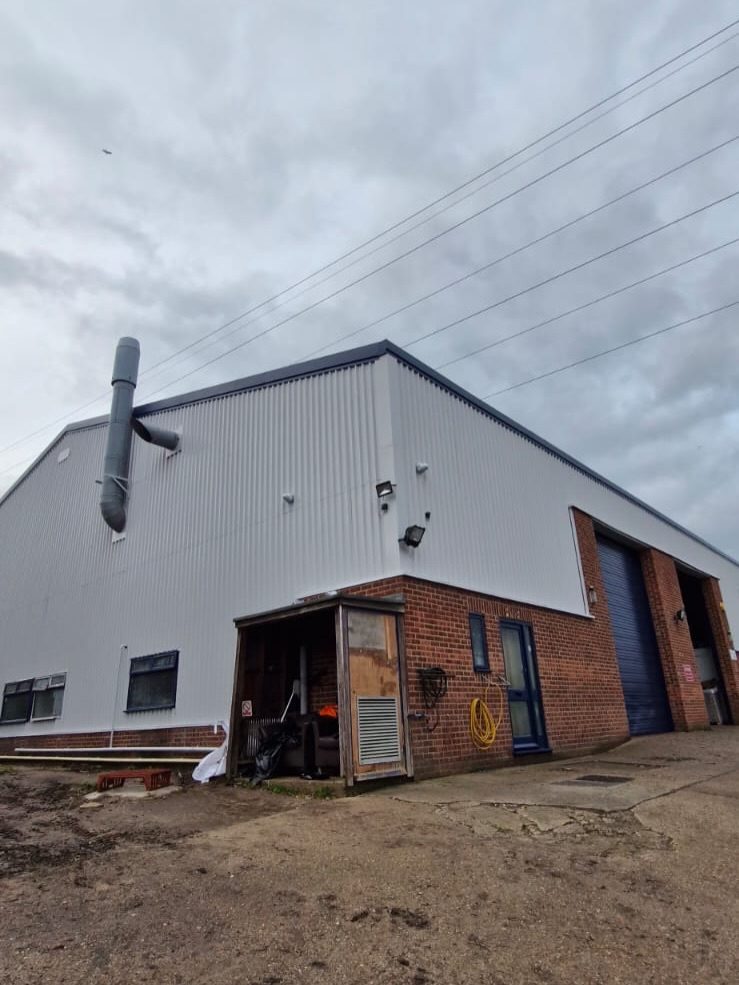
Cut-edge corrosion starts at the factory-cut ends of metal sheets. It spreads invisibly beneath the original coating, water gets trapped in the lap joint, the protective layer delaminates, and rust spreads inward before damage becomes visible.
This article covers what triggers cut-edge corrosion, how structural failure develops, and why cladding paint spraying stops it before it costs thousands in emergency repairs.
What causes cut-edge corrosion on metal cladding?
Cut-edge corrosion occurs when water penetrates the uncoated steel or aluminium exposed by factory cutting. The original prefinished coating ends abruptly at the cut line, no protective layer exists on the freshly exposed edge. Moisture enters through capillary action in the lap joint (where one sheet overlaps another), and because the edge sits within an enclosed space, water remains trapped.
Weathering accelerates the process. Wind-driven rain forces water into lap joints. UV radiation degrades the edge sealant. In coastal or industrial environments with salt spray or airborne corrosive particles, rust formation accelerates dramatically.
The Metal Cladding & Roofing Manufacturers Association (MCRMA) notes that profiled metal sheets, particularly on roofs, face the highest risk because lap joints remain partially exposed to weather on their underside, creating ideal conditions for water retention.
What structural damage results from cut-edge corrosion?
Cut-edge corrosion weakens the cladding panel itself. Rust expands as it forms, putting stress on the parent metal. The coating peels back further. Holes perforate the sheet. Structural integrity fails.
Loss of weathertightness: Corroded edges lose their seal. Water ingress accelerates, affecting insulation and internal building elements.
Accelerated coating breakdown: Once rust initiates at one edge, it spreads along the lap. The protective coating lifespan shortens by 5–10 years compared to properly sealed installations.
Costly emergency repairs: Neglected corrosion forces partial or full cladding replacement. Unscheduled downtime, scaffolding costs, and labour expenses multiply.
How do you treat existing cut-edge corrosion?
Treatment depends on damage severity. Light surface rust requires less intervention than structural pitting.
Mechanical cleaning and recoating: Grinding or grit-blasting removes rust and delaminated coating. Fresh primer and topcoat restore protection. Flexible sealants fill micro-gaps at the edge.
Coating replacement: Heavy corrosion (rust deeper than 0.5 mm, or affecting more than 30% of edge area) demands full high-build coating removal and reapplication. Anti-corrosion coatings designed for laps provide superior adhesion and flexibility.
Corrosion inhibitor barrier: Zinc-rich primers and flexible topcoats create a physical barrier, preventing moisture and oxygen from reaching bare metal beneath the original coating.
Why is prevention better than repair?
Preventive treatment costs 40–60% less than corrective work. You avoid production loss, emergency scheduling, and the risk of temporary weather exposure during repair.
Cladding paint spraying applies a flexible high-build coating to all cut edges before installation or during a planned maintenance window. This seals the edge, stops water penetration, and extends the original coating lifespan by 10–15 years.
What does the cladding paint spraying process involve?
Cladding spray systems use high-pressure techniques to coat cut edges uniformly, even in lap joints.
Surface preparation: Pressure washing at 3000 psi removes loose coating, dirt, and salt deposits. Mechanical rubbing of edges removes any remaining mill scale or corrosion initiators.
Filling and masking: Small holes or voids are filled. Adjacent areas (windows, fixtures) are masked to prevent overspray.
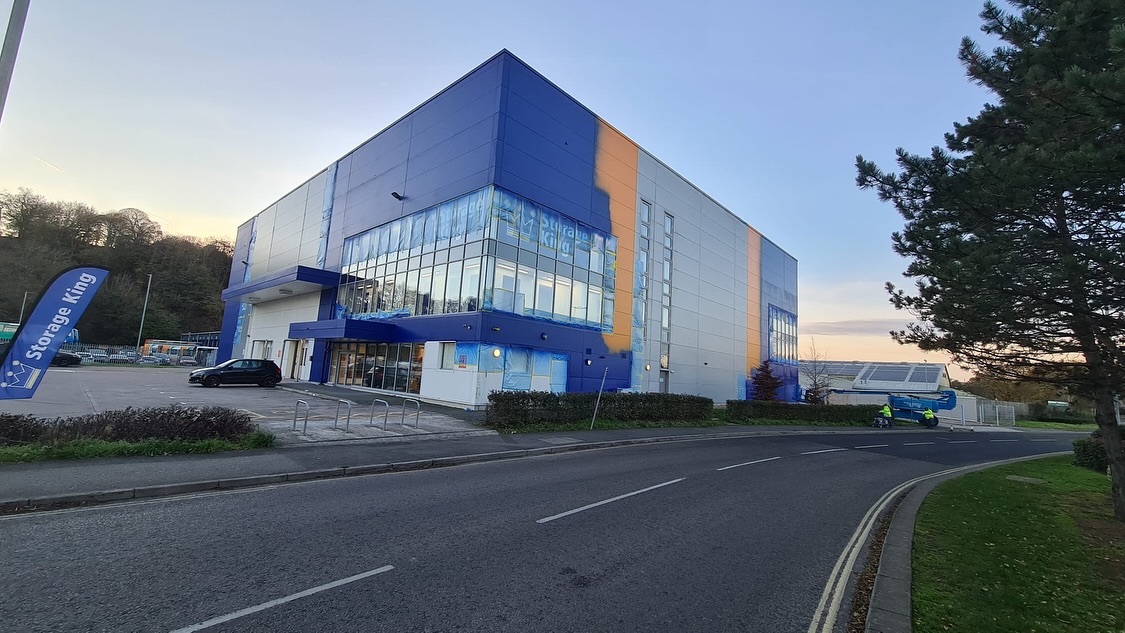
Spray application: Technicians apply primer from mobile elevated work platforms (cherry pickers), ensuring complete coverage on edges and within lap joints. Topcoat follows, with flexibility-enhancing additives for thermal movement.
Full wall cladding refurbishment or overcladding projects often integrate cladding spraying into the schedule, reducing total downtime. On industrial building envelopes, we coordinate the cladding with the structural build.
How long does cladding spray protection last?
High-build flexible coatings provide 10–25 year protection depending on system specification and environmental exposure. Coastal locations or heavy industrial sites may require recoating at the 12–15 year mark. Inland installations often reach 20+ years.
Warranty terms vary. Anglia Decor applies systems with 10–25 year guarantees, backed by manufacturer data on adhesion and UV resistance.
Get professional cut-edge corrosion protection
Cut-edge corrosion is preventable. Early intervention stops rust spread and extends cladding life by a decade or more.
Anglia Decor combines specialist cladding spraying with roof coating expertise, delivering lasting protection on metal cladding, profiled sheets, and lap joints. We pressure-wash, prep edges, and apply high-build flexible coatings with 10–25 year warranties.
Contact Anglia Decor on 01702 965799 for a free cladding assessment.
Cut-edge corrosion is usually a sign your roof and cladding envelope needs a coordinated refurbishment plan, not a single trade. See our editorial round-up of the 6 top UK industrial roofing contractors for 2026 for context on which firms have the in-house depth to treat the roof and cladding interface as one package.