
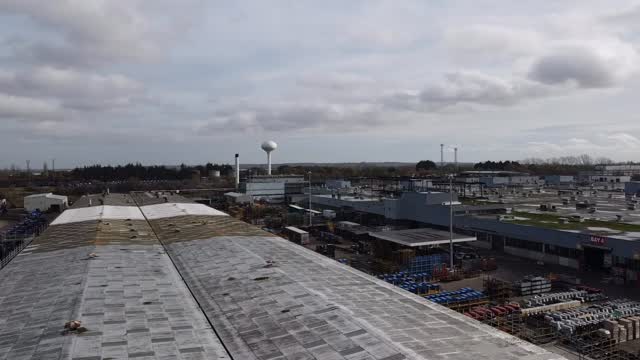
Industrial roofs fail silently. Water ingress damages stock, equipment, and operations long before facility managers notice the first ceiling stain.
Unlike residential roofing, industrial roofs bear heavier weather loads and serve larger operational footprints. A single undetected leak can cost thousands in remediation – structural timber, insulation, inventory loss. Early detection saves money.
This guide shows facility managers and maintenance teams how to spot leaks, identify root causes, and know when to call a professional contractor for industrial roof repairs.
What causes industrial roof leaks, and how do you spot them?
Leaks emerge from five main sources: blocked gutters, material deterioration, failed roof light seals, cut-edge corrosion, and storm damage. Visual inspection catches most of them.
Ceiling stains are the most visible warning. Look for discolouration spreading from corners or edges – this indicates prolonged moisture exposure. Musty odours signal hidden dampness and mould growth, which compromises structural integrity and creates health risks for workers.
Water pooling on floors or dripping directly into work areas demands immediate attention. Visible roof damage – cracks, peeling coating, torn membrane – warrants a professional survey within days. Don't wait for rain to confirm the problem.
Why do gutters fail and cause roof leaks?
Gutters designed to channel water away can trap it instead. Debris accumulation – leaves, moss, sediment – forces water to back up under the membrane. Rust perforation in older gutters creates direct channels for water into the building.
Industrial sites with extended roof areas (warehouses, manufacturing facilities) are particularly vulnerable. Gutter maintenance twice yearly prevents 90% of gutter-related leaks.
How does material deterioration create roof leaks in older buildings?
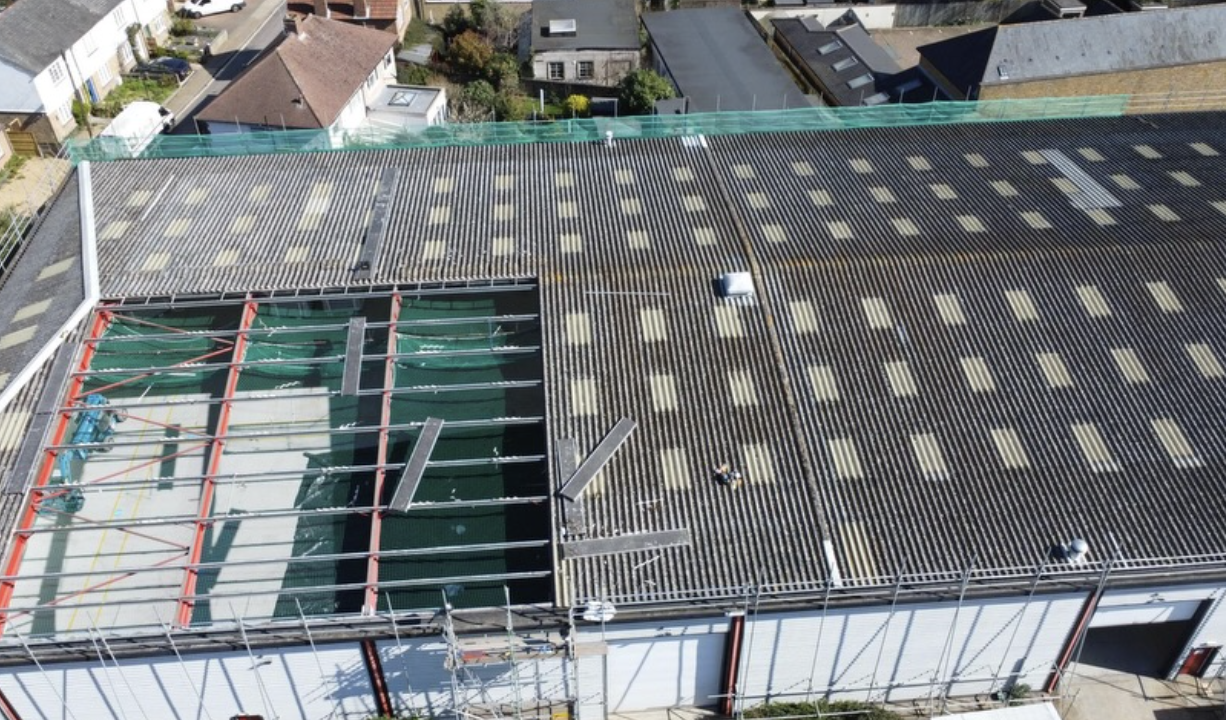
Asbestos roofing systems common in 1970s–1990s industrial buildings crack and peel as UV exposure hardens the material. Modern coated metal roofing degrades predictably too – coating lifespan depends on weathering, pollution exposure, and thermal cycling.
Cracks allow water through the membrane. Once water reaches the substrate, it spreads laterally, causing damage far from the visible entry point. Peeling coating exposes bare metal or fibre, accelerating deterioration.
Why do roof lights develop leaks as they age?
Plastic roof lights provide natural lighting but degrade under UV. Acrylic yellows and becomes brittle within 15–20 years. Polycarbonate develops micro-stress cracks around fixing points.
The seal between the light frame and the roof membrane fails first – thermal expansion and contraction cycles gradually break the mastic or sealant bond. Water pools in the frame cavity and percolates down.
What is cut-edge corrosion and how does it start roof leaks?
Metal roofing sheets are factory-coated for protection, but the cut edges installed at the factory remain uncoated. Moisture accumulates at the cut edge, triggering rust bloom. Rust expands, lifting the coating and creating a capillary pathway for water.
Cut-edge corrosion is slow – typically appearing 3–5 years after installation – but once visible, it spreads rapidly. A single corroded edge can cause leaks across an entire roof bay.
How do professionals repair industrial roof leaks?
Repair method depends on leak type and roof system. For small cracks and deteriorating coating, roof coatings or liquid-applied membranes seal the surface and extend roof life by 10–15 years. Fibreglass relining creates a new waterproof layer bonded to the existing substrate – effective for widespread membrane failure.
Roof light leaks are treated by resealing the frame or replacing the light itself. Cut-edge corrosion requires edge-sealing coatings or, for severe cases, localised sheet replacement.
For buildings with systemic failure – pervasive corrosion, failing membrane, poor insulation – roof refurbishment with new metal sheeting and insulation is more cost-effective than repeated repairs. Insulated Kingspan-type systems add thermal performance while solving leak problems.
Industrial roofing contractors carry insurance, work at height safely, and use trade-certified coatings – critical for warranty compliance and health and safety compliance.
What safety measures protect workers during roof repairs?
Work at height on industrial roofs is regulated. Contractors must provide guardrails or safety rails, harness anchor points, and edge protection scaffolding. For buildings with roof lights, underside netting catches tools or debris.
Permit-to-work procedures apply on most industrial sites. Coordination with site management prevents accidents and ensures compliance with HSE regulations.
How do you extend the lifespan of an industrial roof?
Preventive maintenance pays for itself. Annual gutter clearance, visual inspection of membrane and flashings, and prompt sealing of small cracks stop small problems becoming expensive ones.
Document inspections. Build a maintenance log showing repair dates, materials used, and contractor details – this proves diligence if insurance claims arise later.
Schedule emergency roof repairs within 24 hours of discovering active leaks. The cost of emergency response is trivial compared to the cost of water damage to stock or machinery.
When should you replace an industrial roof instead of repairing it?
If repairs exceed 30% of replacement cost, replacement is usually better value. Roofs older than 20 years with multiple failed areas are candidates for refurbishment. A structural engineer or surveyor can quantify remaining life – get a survey if you're unsure.
Storm damage affecting 25%+ of the roof area justifies replacement, especially if the existing roof is already compromised.
What does an industrial roof survey identify?
Professional surveyors inspect membrane condition, measure coating thickness, check gutter systems, assess structural damage, and identify corrosion or delamination. They produce a report with repair recommendations, cost estimates, and urgency ratings.
This evidence supports insurance claims and helps facility managers budget for works. Survey costs (typically £800–2,000) are recovered in the first repair or insurance settlement.
Leaking industrial roofs don't fix themselves. Early detection, professional diagnosis, and timely repair prevent operational disruption and protect assets. If your roof shows signs of leak – stains, dampness, visible damage – contact a contractor within days. The cost of a survey is negligible against the cost of water damage.
Looking beyond Anglia Decor? We've also published a 2026 editorial shortlist of the UK industrial roofing contractors worth quoting alongside us, with notes on emergency response, regional coverage and asbestos credentials so you can build a credible tender list quickly.