
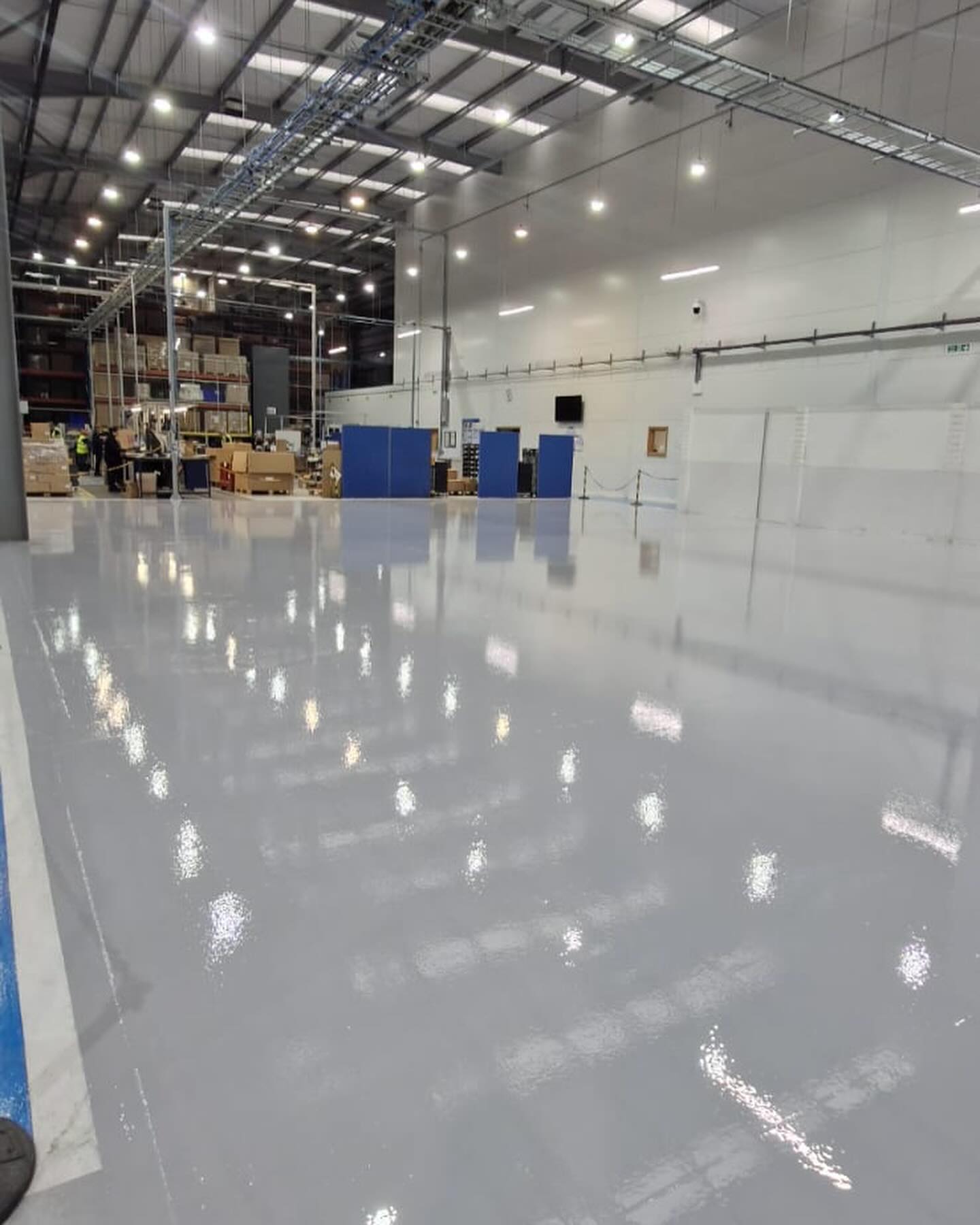
Downtime costs money. In warehouses, manufacturing facilities, and high-traffic commercial spaces, every hour your floor is out of service affects productivity and revenue. On a new-build warehouse, we schedule the floor to suit the handover date.
Understanding the drying and curing timeline for epoxy resin flooring isn't just about scheduling – it's about planning operations, managing installation costs, and knowing when your floor is truly ready for use.
What's the difference between drying and curing?
Drying and curing are not the same process. Drying occurs when solvents evaporate from the epoxy surface; curing is the chemical cross-linking that creates hardness and durability.
This distinction matters because your floor may feel dry to walk on long before it achieves full strength.
How long does epoxy flooring take to dry?
Most epoxy resin systems reach initial surface dryness in 12–24 hours, depending on formulation, humidity, temperature, and coating thickness.
After 12 hours, the surface can support light foot traffic. After 24 hours, the floor is safe for walking and light commercial activity. For heavy machinery, equipment, or concentrated loads, wait a full 7 days until curing is complete.
Temperature and moisture are critical variables. Ideal conditions are 24–30°C with relative humidity below 60%. Cold, damp conditions slow the reaction; excessive heat can trigger surface defects.
What's the full cure time for epoxy flooring?
Epoxy reaches chemical maturity in approximately 7 days under standard conditions. During this window, avoid heavy machinery, dragged furniture, chemicals, and intense foot traffic.
Industrial flooring systems – particularly those in food processing, automotive, or pharmaceutical environments – often require extended cure periods if exposure to solvents, oils, or thermal stress is planned.
After 7 days, traffic patterns can gradually return to normal, though some formulations benefit from 14 days of light use before full-intensity operations resume.
How long does clear coat dry?
Clear epoxy topcoats provide a protective barrier against UV fading, chemical spills, scratches, and wear – essential for resin flooring in high-demand environments.
Most clear coats are walkable after 24 hours but reach full hardness between 5–7 days. This final layer is what determines slip resistance, gloss level, and long-term durability.
What speeds up epoxy drying and curing?
Several proven techniques accelerate the drying and curing process within safe limits:
Surface preparation is foundational
Oils, dust, and concrete pores create barriers to chemical bonding. Mechanically clean the substrate with a broom, industrial hoover, and degreaser. For porous concrete, apply a primer before the base coat.
Contaminated surfaces slow curing significantly and can result in adhesion failure or soft spots.
Apply thinner, multiple coats
Thick coatings take longer to harden because the cross-linking reaction is slower in deeper layers. Divide large areas into sections and apply thinner coats (typically 150–250 microns per layer) rather than single heavy applications.
This approach also reduces the risk of bubbles, runs, and uneven curing.
Control temperature actively
Maintain the space between 24–30°C during application and the first 24–48 hours. Below 15°C, epoxy cures almost imperceptibly; above 40°C, the accelerated reaction can cause premature surface hardening, leaving soft material underneath.
Use portable space heaters or industrial heat lamps to warm cold spaces. In warm climates, strategic ventilation and cooling can prevent thermal stress.
Manage humidity
Relative humidity above 85% introduces moisture into the epoxy film, creating amine blush – a waxy surface contamination that weakens adhesion. Keep humidity below 60% during and immediately after application.
Dehumidifiers are essential in coastal or wet climates.
Why does epoxy curing time matter for your operations?
Warehouse flooring and industrial surfaces demand fast turnaround without compromising quality. Rushing the cure process can result in soft spots, poor chemical resistance, and premature failure – triggering costly re-application within months.
Planning installation during low-traffic periods and maintaining proper environmental conditions throughout the cure window protects your investment and ensures the floor performs as specified.
Anglia Decor's epoxy systems are engineered for rapid dryness and full strength development under real-world conditions. Get in touch to discuss your project timeline and environmental requirements.