Warehouse Flooring Contractors UK
Specialist warehouse flooring contractors installing heavy-duty epoxy and polyurethane resin systems for forklift traffic, pallet storage and distribution centres.
For tendering enquiries, please email info@angliadecor.co.uk
Heavy-Duty Warehouse Flooring Systems and Specification Service
Warehouse concrete takes more sustained abuse than almost any other industrial floor. Counterbalance forklifts running 8 to 12 hours a day apply concentrated point loads through small, hard polyurethane wheels. Pallet trucks drag loads across the same traffic lanes shift after shift. Racking legs press permanent static loads into the slab at points that never get relief. Standard concrete dusts, cracks at joints, and starts spalling within 2 to 3 years under that kind of use. A resin flooring system bonds to the prepared slab and creates a seamless, dust-free, chemically resistant surface that handles continuous mechanical stress without breaking down.
Epoxy resin is the standard specification for most warehouse environments. High-build epoxy coatings at 300 to 500 microns suit lighter warehouses with pedestrian traffic and occasional pallet truck movement. Multi-coat epoxy systems at 1 to 2mm handle medium-duty forklift operations and regular chemical exposure from oils, fuels, and cleaning agents. For distribution centres running counterbalance and reach trucks 24 hours a day, heavy-duty resin flooring screeds at 3 to 6mm thickness provide the impact resistance, abrasion resistance, and load-bearing capacity the operation demands. Polyurethane systems are specified where the warehouse includes cold storage zones, temperature-controlled areas, or heavy vibration from machinery, PU absorbs impact and flexes with thermal movement where rigid epoxy would crack.
Floor marking is built into the resin finish during installation. Forklift lanes, pedestrian walkways, racking zones, fire escape routes, and hazardous material storage areas are colour-coded and demarcated with contrasting resin lines applied directly into the coating system. That means the markings last as long as the floor itself, 15 to 20 years, instead of surface-applied paint that wears off within months under forklift wheels. Anti-slip aggregate is broadcast into the finish coat at loading bay entrances, ramp areas, and any zone where moisture or oil creates slip risk.
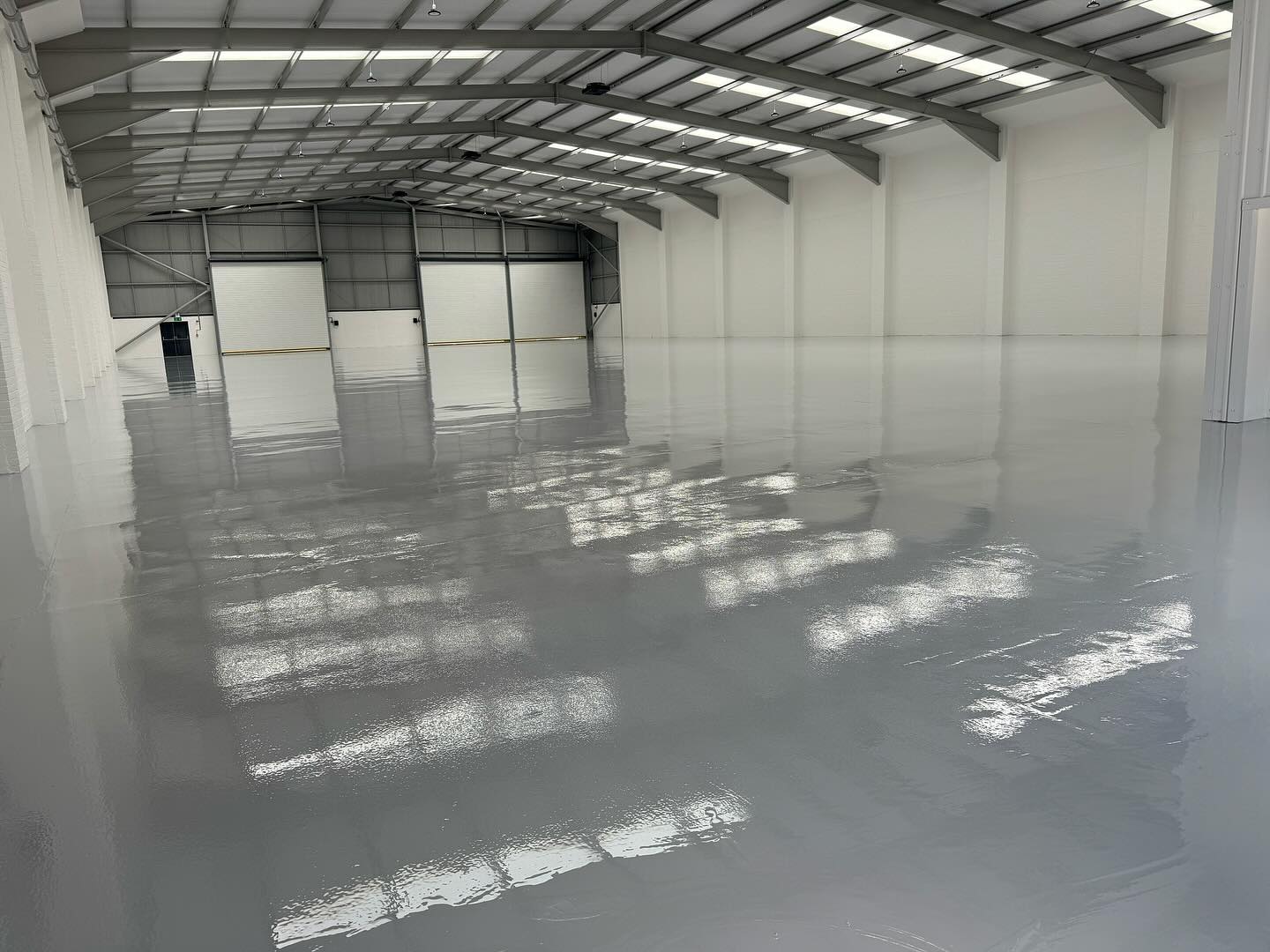
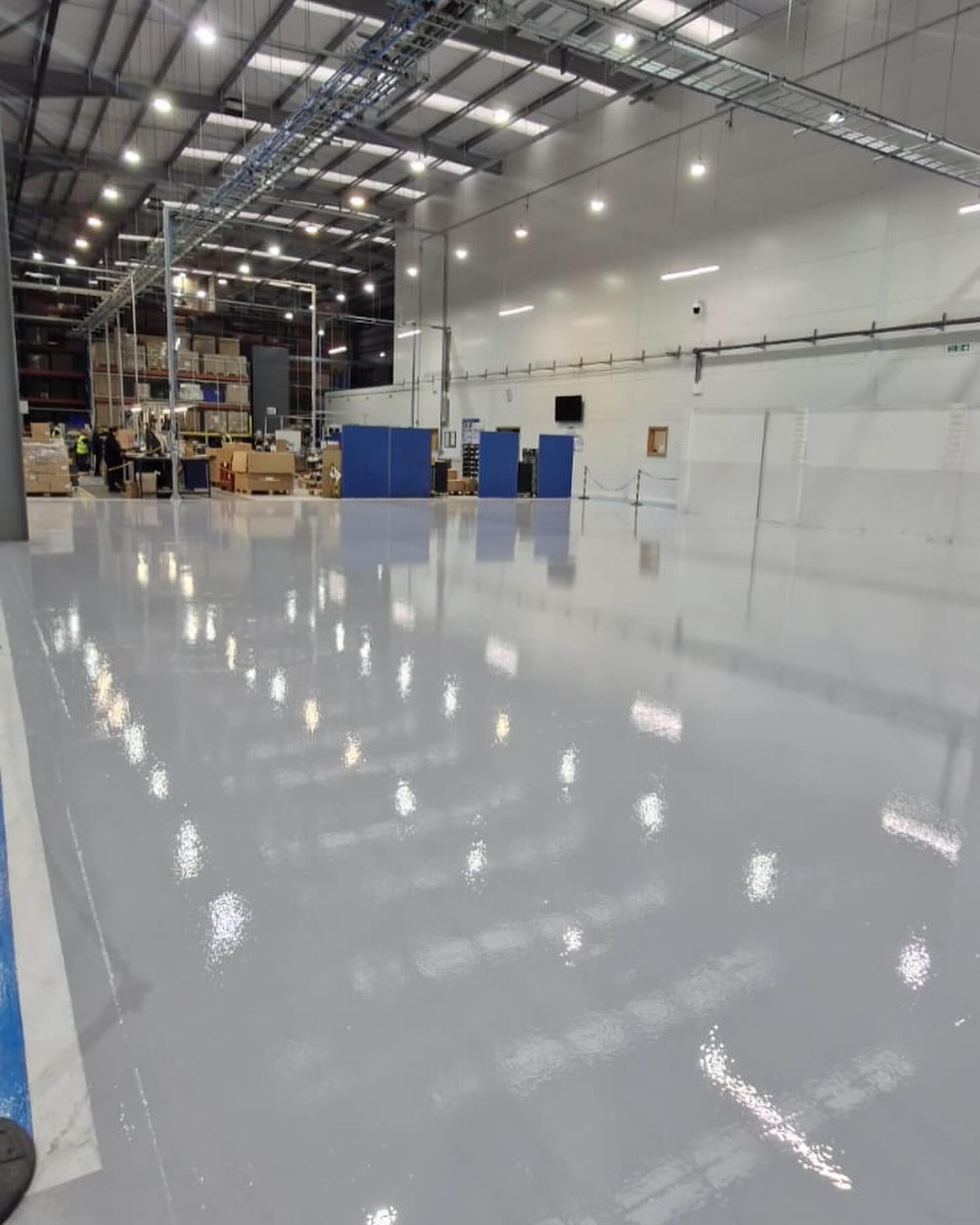
Warehouse Floor Installation by Specialist Contractors
Surface preparation determines whether a warehouse floor lasts 5 years or 20. Anglia Decor shot blasts or diamond grinds the entire slab to strip off old coatings, surface contaminants, weak laitance, and tyre marks. The process opens the concrete pore structure and creates the mechanical key that the resin system grips onto. Cracks are routed out and filled with flexible epoxy filler. Damaged joints are rebuilt. If the slab has moisture, common in ground-floor warehouses without a damp-proof membrane, a moisture-tolerant primer or vapour barrier goes down before the main system. That preparation phase typically accounts for 30 to 50% of the total project time, but it is what separates a floor that performs from one that peels within a year.
Installation in a working warehouse is phased. Anglia Decor sections the floor into zones and works through them sequentially so the operation keeps running. Zone 1 is prepped and coated while zones 2 and 3 remain in use. Once zone 1 cures (24 hours for epoxy, 48 to 72 hours before forklift traffic), operations shift and zone 2 begins. Weekend and overnight installations are standard for time-critical facilities. A typical 1,000 m² warehouse floor takes 5 to 7 working days from surface preparation through to full cure and operational handover, depending on system thickness and site access. On a ground-up warehouse construction project, we sequence the floor around the main build programme.
Anglia Decor has installed warehouse floors in third-party logistics centres, automotive parts warehouses, food distribution hubs, engineering workshops, and retail storage facilities. Every installation includes level checking across the slab, thickness verification at multiple points during application, and a post-cure inspection before the floor is handed back to the client. Where chemical resistant flooring is needed, battery charging areas, chemical storage zones, or wash-down bays within the warehouse, the system specification is adjusted to include enhanced acid and solvent resistance in those specific areas.
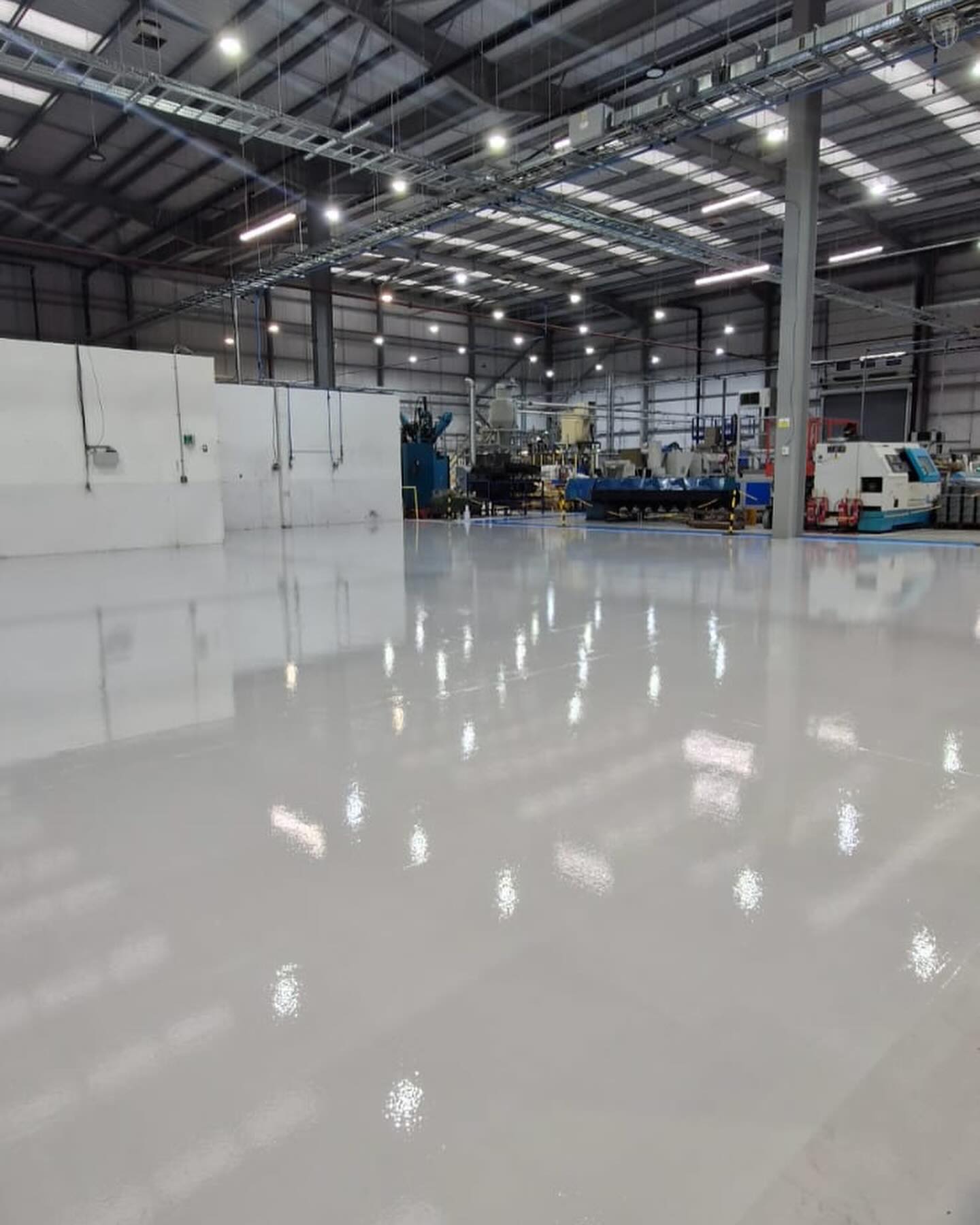
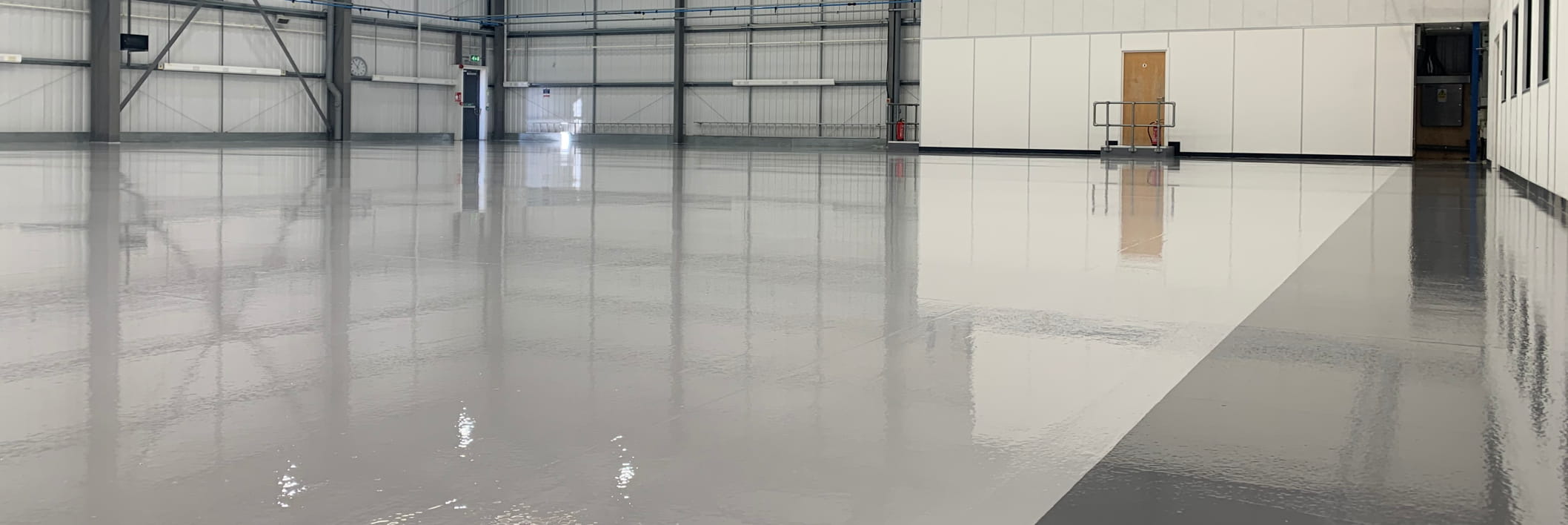
View Some of Our Flooring Work
Swipe to see more images

Upgrade Your Warehouse Floor?
High-build systems handle heavy logistics. Marked lanes included. Free site assessment.
How It Works
Our straightforward process ensures you get the right solution with minimum hassle
Warehouse Survey & Assessment
Assess traffic patterns, vehicle types, and wear areas.
Specification & Planning
Plan traffic lanes and provide fixed-price quotation.
Surface Preparation
Clean and prepare substrate with integrated traffic markings setup.
Installation & Completion
Apply durable coating with traffic marking and testing.
For tendering enquiries, please email info@angliadecor.co.uk
Why Businesses Trust Anglia Decor for Warehouse Flooring Contractors UK
Trusted by businesses across the UK for expert, reliable service
Heavy Traffic Specialists
Extensive warehouse and logistics facility experience.
Forklift Impact Resistant
Systems designed to withstand constant forklift traffic.
High-Build Durability
Thick-film coatings provide extended protection.
Traffic Lane Demarcation
Safety and workflow markings included in specification.
Tyre Mark & Abrasion Resistance
Coatings resist marking and wear from constant movement.
Easy Maintenance
Anti-dust finish makes cleaning quick and simple.
Case Studies
Real projects delivered by Anglia Decor. See the work we've completed for businesses like yours.
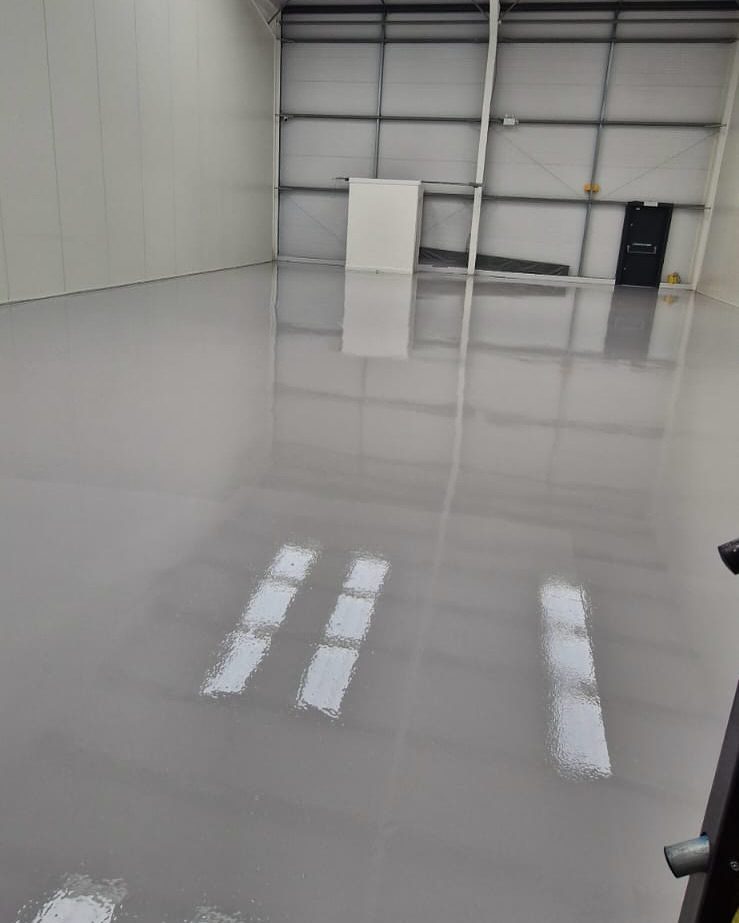
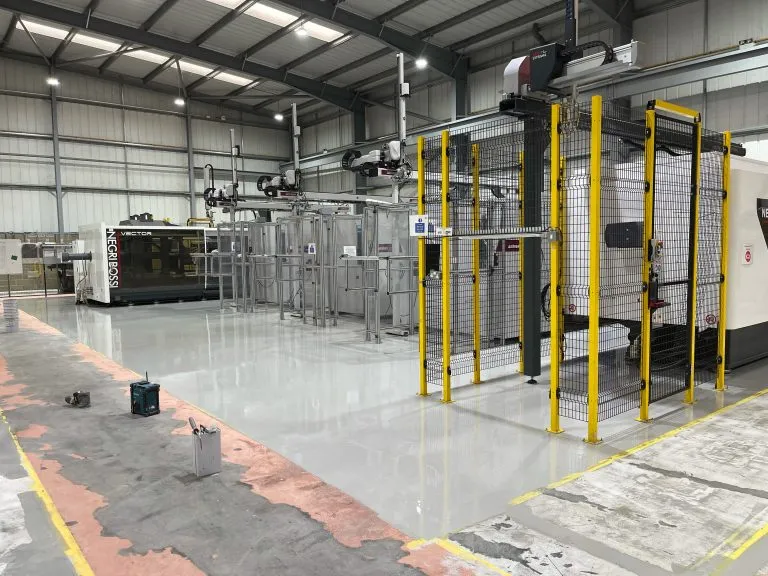
Trusted by leading brands






Frequently Asked Questions
What type of flooring is best for a warehouse?
Epoxy resin is the most common warehouse flooring system, durable, chemically resistant, and cost-effective for most forklift and pallet truck operations. Polyurethane is specified where thermal movement, cold storage, or heavy vibration is involved. MMA is used when the warehouse cannot shut down for more than a few hours.
How long does warehouse flooring take to install?
A typical 1,000 m² warehouse floor takes 5 to 7 working days from surface preparation through to full cure. Epoxy requires 24 hours before foot traffic and 72 hours before forklift use. Anglia Decor phases installations so the warehouse keeps operating throughout.
Can you install warehouse flooring while the warehouse is operational?
Yes. Anglia Decor sections the floor into zones and works through them sequentially. Operations continue in uncoated zones while completed zones cure. Weekend and overnight shifts are standard for time-sensitive facilities.
How thick should warehouse flooring be?
Light-duty warehouse coatings run 300 to 500 microns. Medium-duty forklift areas need 1 to 2mm. Heavy-duty distribution centres with continuous counterbalance forklift traffic require 3 to 6mm resin screeds. Anglia Decor specifies thickness based on the traffic type and intensity during the site survey.
Does warehouse flooring include floor markings?
Yes. Forklift lanes, pedestrian walkways, racking zones, fire routes, and hazardous storage areas are colour-coded with contrasting resin lines applied directly into the coating during installation. The markings last the full life of the floor, 15 to 20 years.
How long does warehouse resin flooring last?
A properly installed resin floor in a well-maintained warehouse lasts 15 to 20 years. Lifespan depends on traffic intensity, chemical exposure, and cleaning regime. High-traffic lanes may need localised recoating at 10 to 12 years.

Ready to Start Your Warehouse Flooring Contractors UK Project?
Our warehouse flooring contractors uk specialists will assess your facility and provide a tailored solution with minimal downtime.