
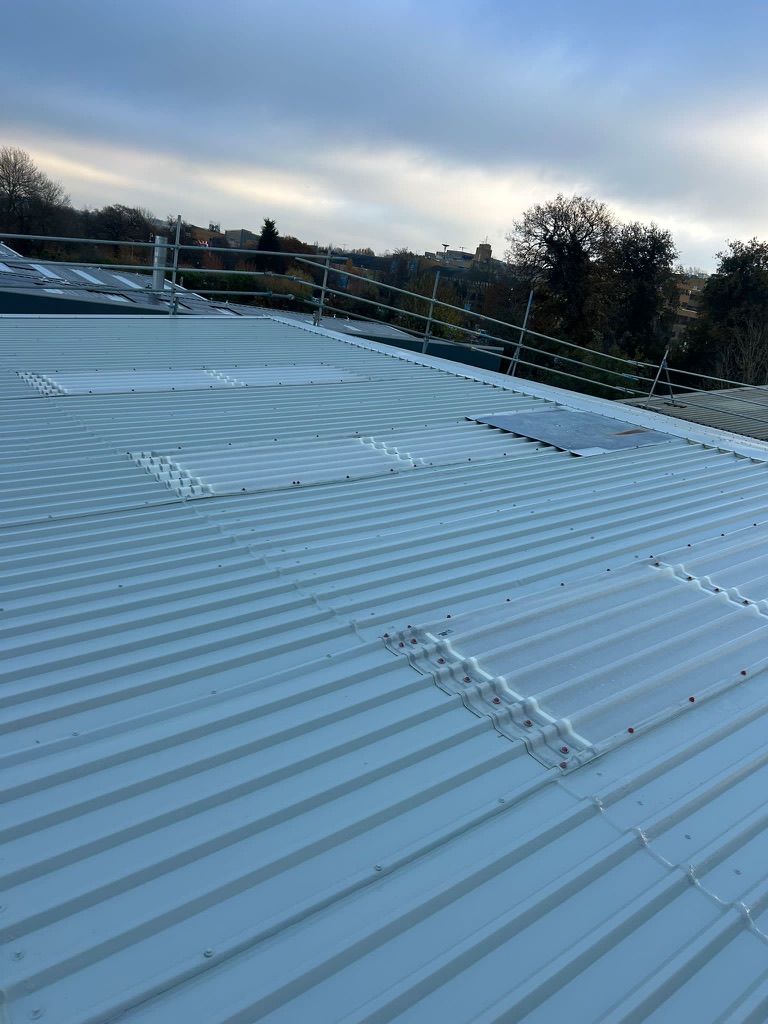
Roof coatings are liquid-applied protective membranes that extend the lifespan of commercial and residential roofs by up to 20 years. Applied directly over existing roof surfaces, coatings provide waterproofing, UV resistance, and thermal reflectivity at a fraction of the cost of full roof replacement.
This guide covers the 4 main types of roof coating, their applications across different roof substrates, and the advantages and disadvantages of each system. Whether you need to protect an ageing industrial roof or improve energy efficiency on a commercial building, the right coating system delivers measurable performance gains. Anglia Decor specifies and installs all four systems as part of our roof coatings service, typically applied by spray application for fast, consistent coverage on large industrial roofs.
What Are the 4 Main Types of Roof Coating?
The 4 main types of roof coating are asphalt, acrylic, silicone, and polyurethane. Each coating type differs in composition, lifespan, cost, and suitability for specific roof substrates. Asphalt coatings offer the lowest upfront cost, while silicone and polyurethane systems provide the longest protection at a higher price point.
Asphalt Coatings
Asphalt roof coatings – a petroleum-based protective layer – are the most affordable option for low-slope roofs. These coatings bond to the existing roof surface to provide water resistance and basic UV protection.
Asphalt coatings suit budget-conscious projects where long-term performance is less critical. They offer good water resistance but have a shorter lifespan and less flexibility than acrylic, silicone, or polyurethane alternatives. Recoating is required more frequently, typically every 5–7 years.
Acrylic Coatings
Acrylic roof coatings are water-based formulations made from acrylic polymers mixed with reflective pigments and fillers. Acrylic coatings provide good UV reflectivity, flexibility, and durability at an economical price point.
Acrylic coatings work best on smooth roofing substrates where ponding water is not an issue. They do not perform as well as silicone coatings in areas with standing water, but they offer strong reflectivity and are easier to apply. Typical lifespan ranges from 7–10 years before recoating is needed.
Silicone Coatings
Silicone roof coatings – based on silicone polymers – provide the best water resistance of any roof coating type. Silicone coatings form a seamless, flexible membrane that withstands ponding water, extreme weather, and UV exposure without cracking or peeling.
Silicone coatings allow the roof substrate to expand and contract with temperature changes, making them suitable for metal and single-ply membrane roofs. They cost more than asphalt or acrylic coatings but deliver 10–15 years of protection per application. Silicone coatings are the preferred choice for flat roofs prone to water pooling.
Polyurethane Coatings
Polyurethane roof coatings form a thick, rubber-like protective layer with excellent adhesion, impact resistance, and longevity. Polyurethane coatings bond effectively to irregular roof shapes and textured surfaces where other coating types struggle.
Two main types of polyurethane coating serve different roles in a roof coating system:
Aliphatic polyurethane functions as a top coat, offering superior UV resistance and colour retention. Aliphatic polyurethane resists dirt accumulation and maintains reflectivity over its full lifespan.
Aromatic polyurethane serves as a base coat at a lower cost. Aromatic polyurethane provides excellent adhesion and moisture protection but offers less UV resistance than aliphatic formulations, making it better suited to covered or shaded roof areas.
What Roof Types Are Suitable for Roof Coatings?
Roof coatings are suitable for low-slope roofs, metal roofs, modified bitumen systems, and single-ply membranes. Each roof type benefits from coating application in different ways, from improved waterproofing and UV resistance to corrosion prevention and extended substrate lifespan.
Low-Slope Roofs
Low-slope roofs – defined as any roof with a pitch lower than 2:12 – are the most common application for roof coatings. Coatings add a seamless waterproof membrane across the entire roof surface, eliminating the joints and seams that cause leaks on built-up, modified bitumen, and single-ply membrane roofs.
Roof coatings on low-slope roofs also add UV resistance and thermal reflectivity that the base roofing material alone does not provide.
Metal Roofs
Metal roofs develop rust and corrosion over time, particularly at fastener points and panel overlaps. A protective roof coating bonds to the metal surface to prevent oxidation and seal vulnerable areas against moisture ingress.
Reflective roof coatings on metal roofs reduce surface temperatures significantly, lowering thermal expansion stress and extending the lifespan of the metal substrate.
Modified Bitumen Roofs
Modified bitumen roofs – also known as mod-bit – rely on overlapping sheets with heat-welded seams. These seams are the primary failure point on mod-bit roofs. Liquid-applied roof coatings provide seamless protection across the entire surface, eliminating seam vulnerability and improving waterproofing performance.
Single-Ply Membranes
Single-ply membrane roofs – including PVC, EPDM, and TPO systems – are susceptible to punctures, UV degradation, and seam failure as they age. Liquid-applied roof coatings form a fully adhered protective layer over single-ply membranes, reinforcing weak points and extending the membrane's functional lifespan by up to 10 years.
What Are the Advantages of Roof Coatings?
Roof coatings extend roof lifespan by up to 20 years, reduce energy costs through solar reflectivity, and cost significantly less than full roof replacement. The 4 primary advantages are extended roof life, improved energy efficiency, lower upfront cost, and reduced heat absorption.
Extended Roof Life
Roof coatings extend the functional lifespan of an existing roof by up to 20 years. The coating forms a protective barrier against UV radiation, extreme temperatures, moisture, and environmental pollutants that cause roof degradation.
Extending an existing roof's lifespan avoids the cost and disruption of a full roof replacement – a significant advantage for commercial and industrial buildings where roof access is complex. On industrial building projects, we coordinate the roof with the wider build.
Improved Energy Efficiency
Reflective roof coatings are engineered to reflect sunlight and solar radiation away from the building. A reflective coating reduces roof surface temperature by up to 30°C compared to an uncoated dark roof, lowering the cooling load on air conditioning systems and reducing energy bills during warm months.
Lower Cost Than Full Replacement
Roof coatings cost a fraction of a full roof replacement. The exact price depends on roof size, substrate condition, and coating type selected, but coating application avoids the expense of a complete tear-off and reinstallation. For building owners looking to extend roof performance without major capital expenditure, coatings offer the strongest return on investment.
Reduced Heat Absorption
Reflective roof coatings contain pigments that deflect solar radiation. An uncoated dark roof reaches surface temperatures above 75°C on a hot day. A reflective coating keeps surface temperatures significantly lower, reducing thermal stress on roofing materials and extending their service life.
Reflective coatings also reduce the urban heat island effect – the temperature difference between built-up urban areas and surrounding rural land.
What Are the Disadvantages of Roof Coatings?
Roof coatings require reapplication every 5–15 years depending on the coating type, need thorough surface preparation before application, and cannot repair severely damaged roofs. The 5 main disadvantages are limited lifespan, preparation requirements, unsuitability for major damage, ponding water issues, and dirt accumulation.
Limited lifespan: Roof coatings do not last permanently. Depending on the coating material and environmental conditions, reapplication is required every 5–15 years. Asphalt coatings require the most frequent recoating; silicone and polyurethane systems last the longest.
Surface preparation required: The roof surface must be cleaned, repaired, and primed before coating application. Preparation adds time and labour cost to the project, particularly on roofs with existing damage or heavy contamination.
Not suitable for severely damaged roofs: Roof coatings protect and extend – they do not reconstruct. A roof with extensive structural damage, widespread membrane failure, or saturated insulation requires full replacement rather than coating.
Ponding water issues: Acrylic roof coatings on flat roofs degrade faster in areas where water pools. Ponding water breaks down acrylic formulations and promotes mould growth. Silicone coatings perform better in ponding conditions.
Dirt accumulation: Silicone coatings attract and retain dirt more than other coating types. Dirt buildup reduces reflectivity – increasing energy costs – and affects the roof's appearance over time.
How Do You Choose the Right Roof Coating?
Choosing the right roof coating requires assessing 4 factors: roof type and condition, local climate, budget, and the specific performance benefits needed. Each factor narrows the selection to the coating system best suited to the building.
Roof Type and Condition
The roof substrate determines which coating types are compatible. Asphalt, metal, concrete, and single-ply membrane roofs each have specific coating requirements based on adhesion, flexibility, and moisture tolerance.
Roof condition also affects coating selection. A roof in good structural condition needs standard preparation and a single-coat application. A worn or damaged roof requires repairs, primer application, and potentially a multi-coat system.
Climate
Climate directly affects roof coating performance and longevity. In cold climates with freeze-thaw cycles, flexible coatings like silicone and polyurethane resist cracking. In hot climates with high UV exposure, reflective white coatings reduce heat gain and thermal stress.
Local weather patterns – including rainfall intensity, wind exposure, and humidity levels – influence the required elasticity, durability, and water resistance of the coating system.
Budget
Acrylic elastomeric roof coatings are the most budget-friendly option. Silicone, polyurethane, and hot asphalt coatings sit at the premium end. The cheapest coating is not always the most cost-effective – silicone coatings cost more upfront but last 10–15 years compared to 5–7 years for asphalt, reducing total cost over the building's lifecycle.
Performance Requirements
Different coating types excel at different performance attributes. Energy efficiency points towards reflective acrylic or silicone coatings. Leak protection on flat roofs favours silicone. Chemical resistance in industrial environments requires polyurethane. Match the coating to the building's primary performance need.
Aesthetics
Roof coatings are available in a range of colours, with white and light reflective tones the most common for energy efficiency purposes. Textured coatings improve grip on walkable roof areas and disguise surface imperfections on older substrates.
What Should You Look for in a Roof Coating Contractor?
A qualified roof coating contractor should demonstrate proven experience with coating projects, verified customer reviews, and full licensing and insurance coverage. These 3 factors separate reliable contractors from unqualified operators.
Coating experience: Ask how many roof coating projects the contractor has completed, which coating types they work with, and request examples of past projects on similar roof substrates. A contractor experienced in industrial and commercial roof coatings understands the preparation, application, and curing requirements that determine long-term performance.
Reviews and references: Check customer reviews on Google and request direct references from past clients. Contact references to assess work quality, project timelines, communication, and aftercare. Verified reviews provide the clearest indication of contractor reliability.
Licensing and insurance: The contractor must hold all required trade licences and carry both public liability insurance and employers' liability insurance. Request copies of certificates before work begins. Proper insurance protects the building owner against liability for injuries or property damage during the project.
Extend the Life of Your Roof with Anglia Decor
Anglia Decor – specialist industrial and commercial roof coating contractors – provides tailored roof coating solutions for buildings across the UK, including completed industrial new builds. Whether you need to extend your roof's lifespan, improve energy efficiency, or waterproof an ageing roof system, our team identifies the right coating for your substrate and conditions.
Contact us for a free quotation.
Further reading: If you are shortlisting contractors for a coating or refurbishment programme, see our independent round-up of the 6 top UK industrial roofing contractors for 2026, including notes on accreditation, in-house depth and recent project delivery.