
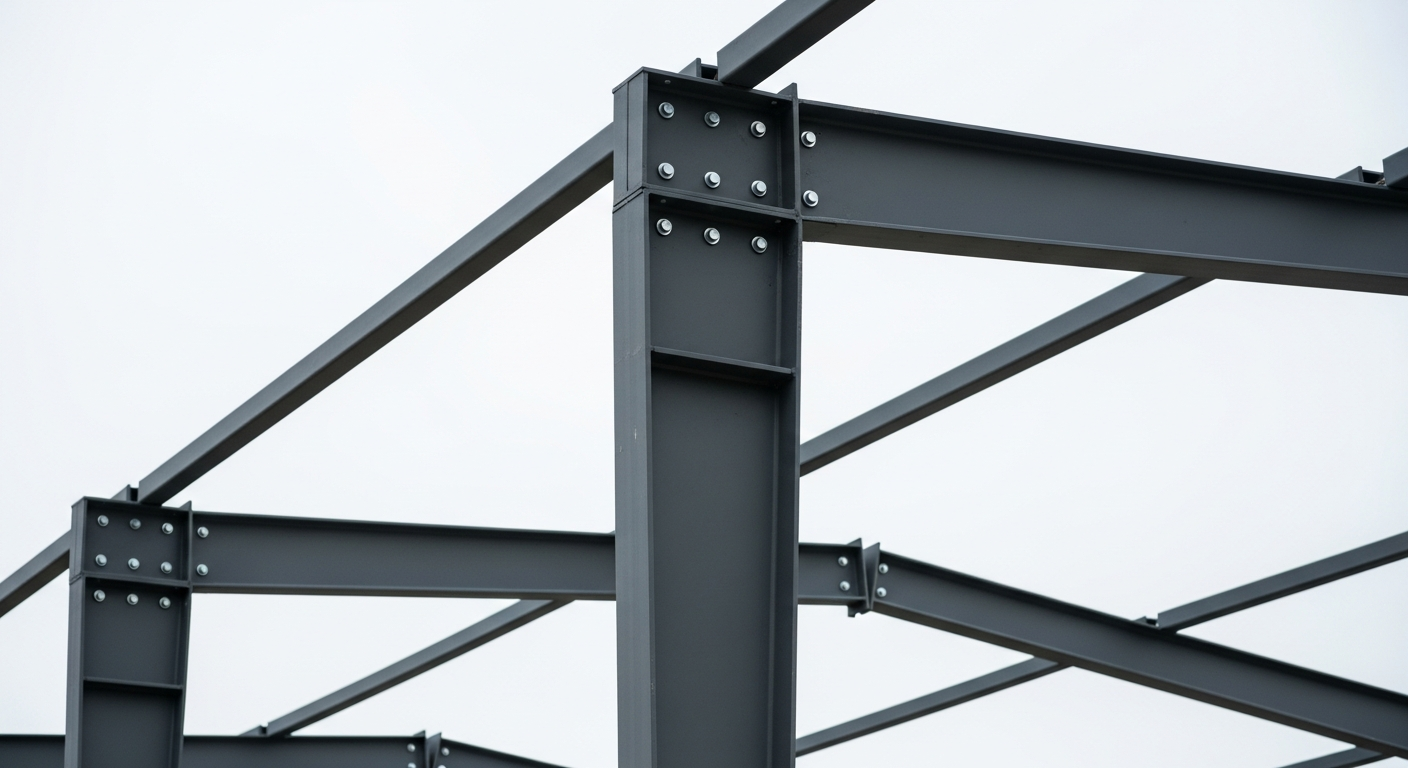
For most UK industrial units, a steel portal frame is the default choice. It is fast to erect, cost effective, and gives wide clear spans with no internal columns. Concrete frames have their place for specific needs such as fire performance or very heavy floor loadings, but steel wins on most counts.
Why is steel so popular?
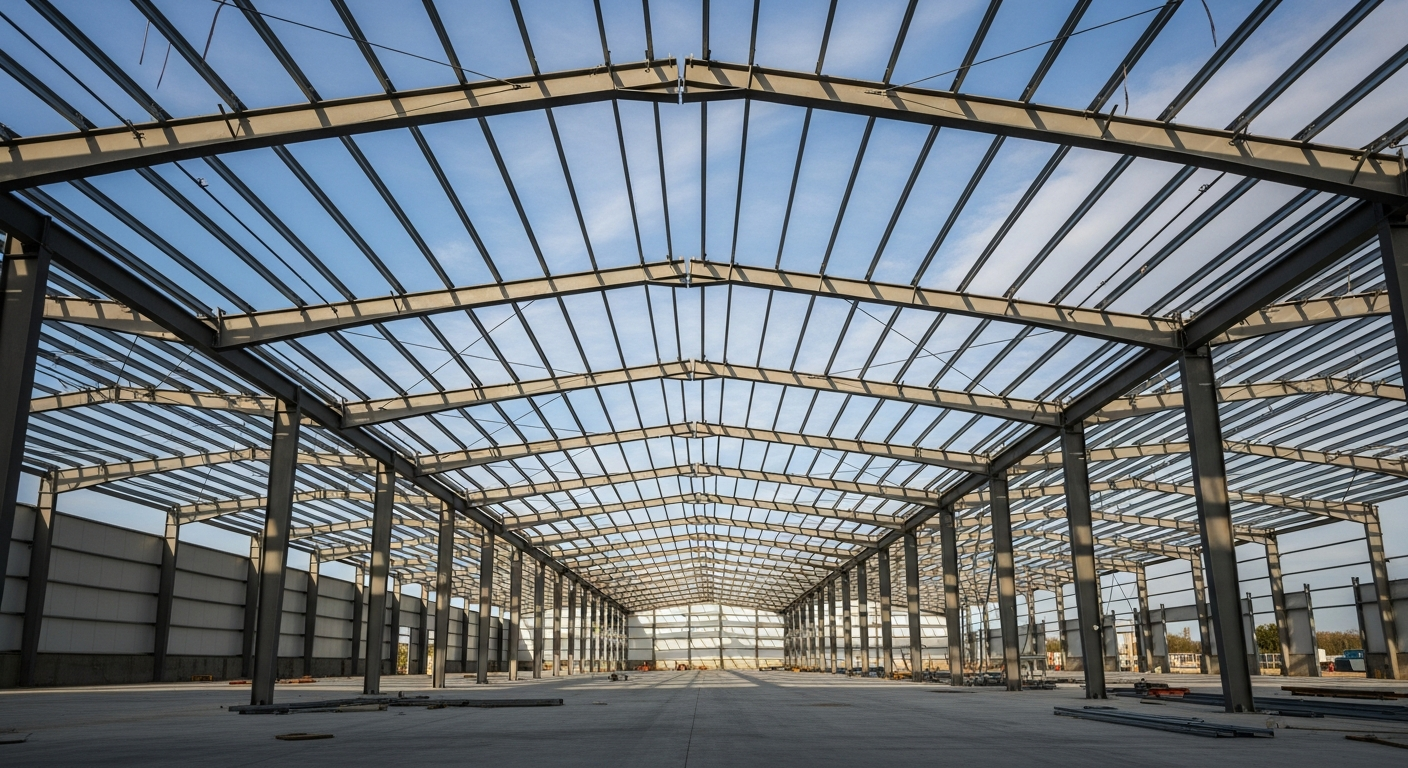
Steel portal frames are light, strong, and quick to put up, often in a week or two for a single unit. The wide clear span gives flexible, column free space for racking, machinery, and vehicle movement. Steel is also easy to extend later, which suits growing businesses.
When does concrete make sense?
Concrete frames can offer inherent fire resistance and suit buildings with very high floor loads or specific durability needs. They usually take longer to build and cost more for a standard unit, so they are the exception rather than the rule.
How does the frame affect the rest of the build?
The frame sets the spans, the roof, and the cladding, so it shapes the whole scheme. A steel frame's speed is a big reason new units come together quickly, as we explain in our guide on build timescales. The frame choice also feeds into your overall build cost. It also sets the roof area you will maintain over time, where coating an industrial roof is the cost-effective alternative to replacement.
Get the structure right from the start
We deliver industrial building construction and warehouse construction from foundations to finishes, so the frame is designed as part of a complete building, not in isolation.
Contact us to discuss the best structure for your unit.