
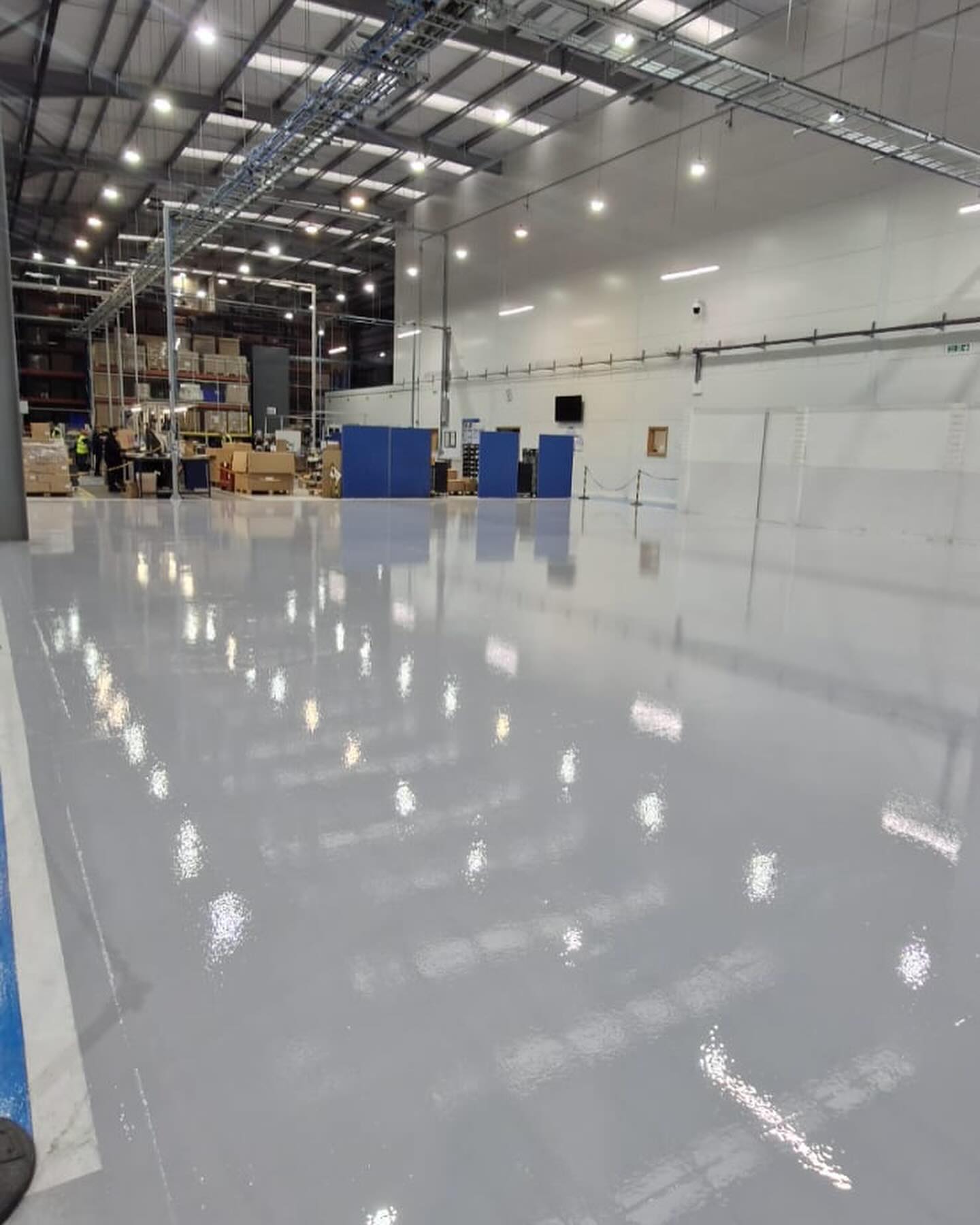
Industrial flooring systems must withstand chemical exposure, thermal shock, heavy machinery, and sustained foot traffic – all while maintaining slip resistance and durability.
The choice of substrate determines your facility's operational lifespan, safety compliance, and maintenance costs.
We outline six proven industrial flooring types and their optimal applications below.
What is epoxy flooring and where is it used?
Epoxy flooring is a two-part polyurethane resin system – epoxy base + hardener + aggregate – applied in 3–4mm layers to achieve a seamless, high-gloss finish.
The resulting surface is non-porous, chemically bonded to concrete, and resistant to oils, solvents, and thermal cycling. Epoxy performs exceptionally in aerospace hangars, automotive assembly plants, and food processing facilities where hygiene standards demand frequent washdown protocols.
Epoxy flooring systems excel in environments requiring both rapid clean-up and long-term impact resistance – typical lifespan 5–10 years depending on traffic volume.
What defines polyurethane flooring and its advantages?
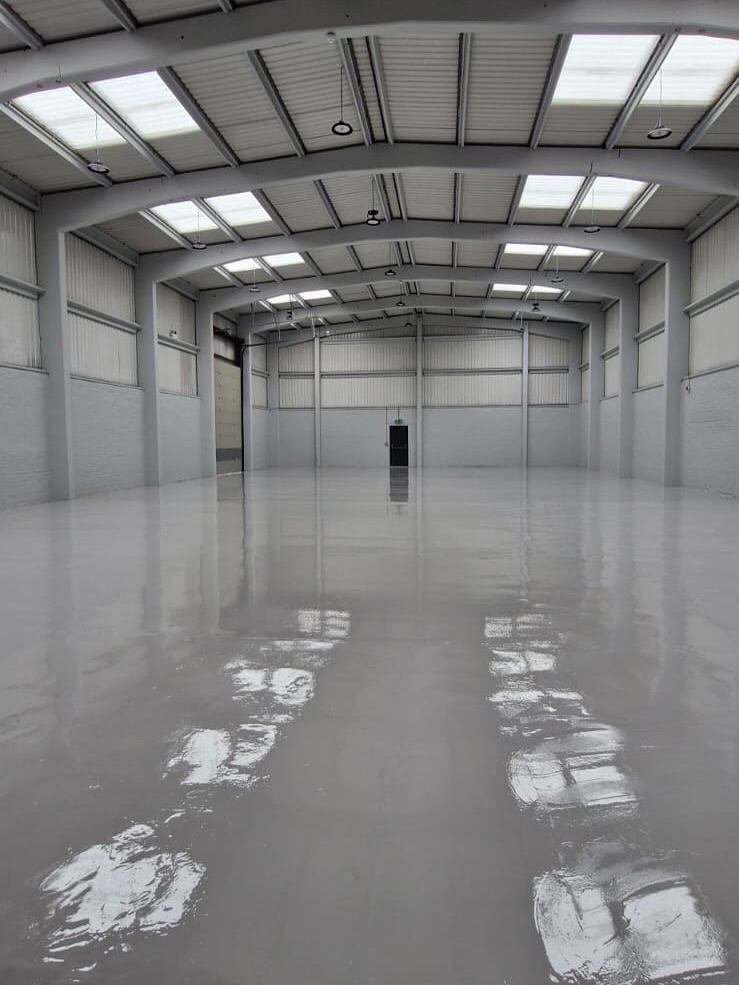
Polyurethane (PU) coatings combine polyol resins with isocyanate hardeners to form a thick, elastic membrane – typically 2–6mm – that flexes under shock loads.
Unlike epoxy's rigid cure, polyurethane's elasticity absorbs impact from dropped equipment, reducing substrate stress and extending service life in high-vibration environments. Chemical resistance spans automotive fuels, hydraulic oils, and mild alkalis.
Polyurethane flooring is the specification for engine test cells and heavy fabrication plants where machinery vibration and impact loads dominate other factors.
How does resin flooring differ from epoxy?
Resin flooring encompasses a broader category – synthetic polyester or epoxy resins mixed with hardeners, fillers, and decorative aggregates – engineered for specific environmental hazards.
The distinction matters: resin formulations can incorporate anti-slip additives (grit aggregate), static-dissipative carbon black, or pigmented logos in a single pour. Epoxy excels in chemical resistance; resin prioritises customisation and aesthetic control.
Resin flooring suits food production facilities requiring colour-coded safety zones and anti-static flooring for electronics assembly.
What makes concrete flooring the industry standard?
Portland cement concrete – sand, gravel, water – remains the baseline industrial substrate because it's cost-effective, thermally stable, and capable of supporting fork-lift trucks and grinding wheels without delamination.
Uncoated concrete alone resists oil and grease intrusion poorly, absorbing contaminants into its porous matrix. A sealed or coated concrete slab – topped with epoxy, polyurethane, or resin – becomes a complete flooring system rather than a foundation.
Industrial flooring specifications always start with concrete assessment: aggregate quality, curing time, flatness tolerance (±3mm), and moisture vapour transmission rate (MVTR).
What role does vinyl flooring play in industrial settings?
Vinyl sheet flooring – homogeneous or heterogeneous PVC – offers waterproof, seamless coverage ideal for wet processing environments: laboratories, food prep areas, chemical storage.
Heat welding seams eliminates capillary moisture migration. Vinyl absorbs minimal water and resists weak acids and salts, making it suitable for food production flooring where standing water and frequent chemical wash-down are standard.
Durability typically spans 10–15 years in moderate-traffic zones, though repeated thermal cycling can embrittle vinyl in extreme cold storage facilities.
Why is rubber flooring essential in safety-critical areas?
Rubber compounds – natural or synthetic elastomers – deliver the highest coefficient of friction available, even when wet with standing liquid.
Rubber's acoustic damping also reduces machinery noise to <130 dB in fabrication shops. Chemical compatibility extends to mineral oils and light solvents, though aromatic hydrocarbons cause swelling.
Choose rubber for commercial kitchens, food halls, and chemical loading areas where slip prevention outweighs aesthetic finish.
How should you select the right flooring for your facility?
Match the flooring type to three factors: chemical exposure (acids, oils, thermal shock), mechanical loading (fork-lift traffic, vibration, dropped weights), and hygiene protocols (washdown frequency, sanitation standards).
According to The Concrete Centre's industrial flooring specification guide, surface preparation – shot-blasting to SA 2.5 or grinding to expose aggregate – determines resin adhesion and service life more than material choice alone.
A warehouse flooring system rated for light foot traffic will fail if subjected to daily forklift puncture loads. Conversely, a high-performance epoxy resin system is cost-inefficient if applied to low-traffic office areas.
Anglia Decor's flooring surveys assess your facility's traffic patterns, chemical inventory, and thermal cycles to specify the optimal system for operational demands and budget constraints.
Contact Anglia Decor for site inspection and flooring specification matching your industrial facility's exact requirements.