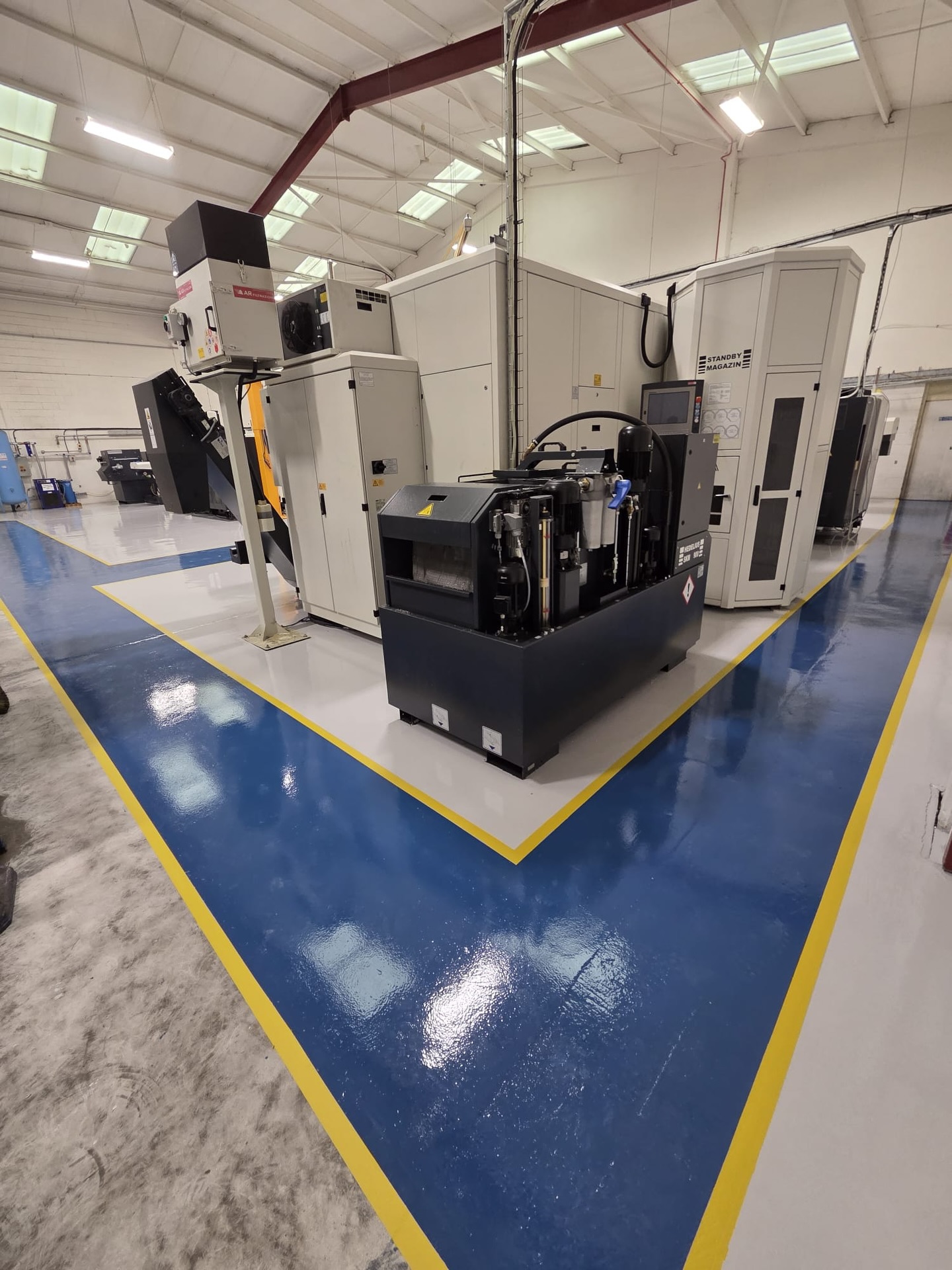
Food Production Flooring
Specialist food production flooring contractors installing HACCP-compliant polyurethane and resin systems for food factories, bakeries, dairies and breweries.
For tendering enquiries, please email info@angliadecor.co.uk
Food Grade Flooring Systems for Production and Processing Service Environments
Food production floors face a combination of stresses that no other industrial environment matches. Thermal shock from hot wash-downs hitting cold concrete. Organic acids from fruit, dairy, and meat processing attacking the surface. Fats, oils, and greases making floors dangerously slippery. Forklift and pallet truck traffic running across wet surfaces 16 to 24 hours a day. Steam cleaning at 80°C or above as part of daily sanitation protocols. A floor that cannot handle all of those simultaneously fails, and a failed floor in a food factory is a hygiene audit failure, a production shutdown, and a cost that runs into tens of thousands.
Polyurethane cement (PU cement) is the primary specification for food production flooring. The cementitious polyurethane binder creates a dense, seamless screed at 6 to 9mm thickness that tolerates thermal shock from −30°C to +120°C without cracking, delaminating, or losing adhesion to the substrate. That thermal range covers everything from blast freezer operation to steam cleaning and hot-water wash-down in a single shift. PU cement is classified under FeRFA Type 8 (heavy-duty screed) and delivers the mechanical strength to handle continuous forklift traffic alongside the chemical resistance to withstand daily exposure to organic acids, caustic cleaners, and sanitising agents. For facilities where a full PU cement screed is not required, polyurethane flooring systems at 4 to 6mm provide a lighter-duty alternative with the same thermal and moisture tolerance.
Hygiene in food production flooring is engineered into the system, not applied as an afterthought. Seamless cove bases curve the floor up the wall to eliminate the 90-degree junction where bacteria and moisture collect. Falls to drain are built into the screed during installation, typically 1:80 to 1:60 gradient, so water runs off the surface and into stainless steel drainage channels without pooling. The surface texture is specified to balance slip resistance under wet, greasy conditions against cleanability: too rough and the floor traps debris, too smooth and it becomes a slip hazard. FeRFA-approved anti-slip aggregates at controlled broadcast rates deliver the correct pendulum test value (PTV 36+) for food production zones.
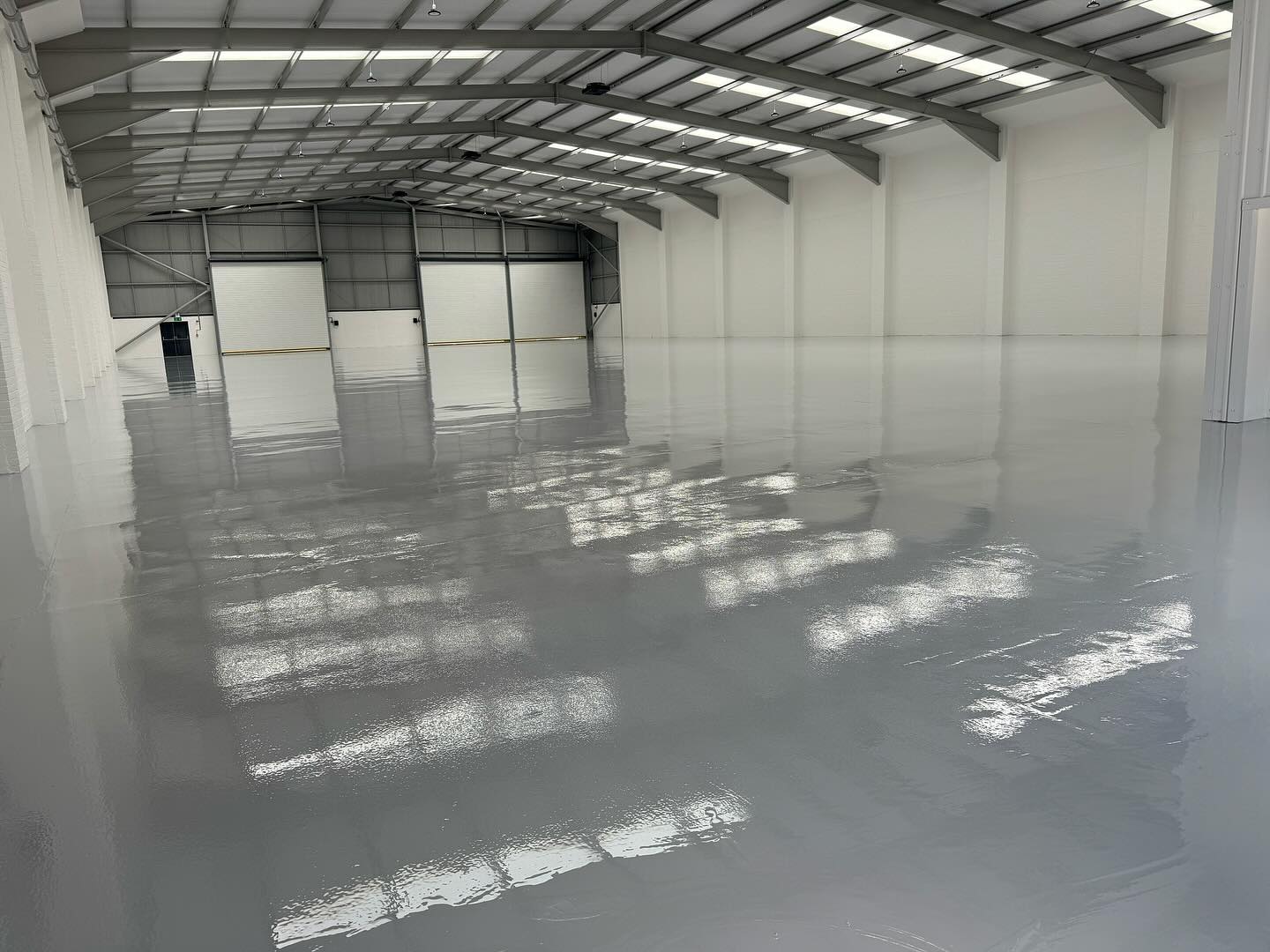
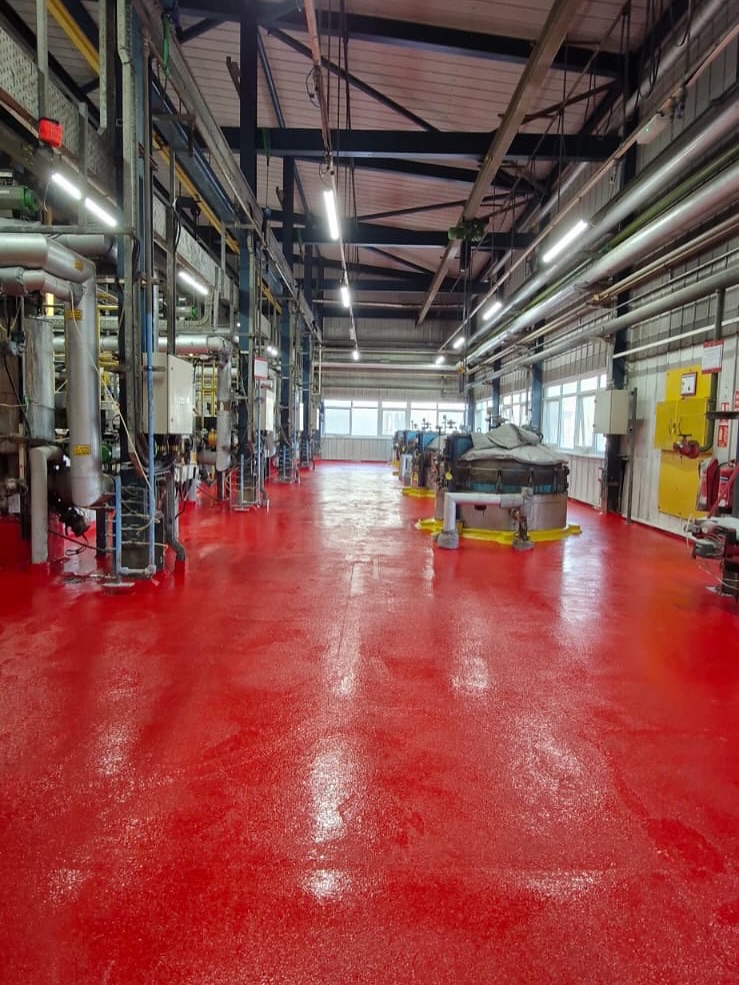
Food Factory Floor Installation by HACCP-Compliant Contractors
Installing a floor in a food production facility requires planning around live operations, strict hygiene protocols, and regulatory compliance. Anglia Decor conducts a full site survey covering substrate condition, moisture levels, production schedules, chemical exposure profiles, drainage layout, and cleaning regimes before specifying the system. Surface preparation follows FeRFA standards, shot blasting or diamond grinding to remove existing coatings, expose sound concrete, and create a mechanical key. In food factories, contamination control during installation is critical: dust extraction runs continuously, adjacent production zones are sealed with temporary barriers, and all materials are food-safe and low-odour.
PU cement screeds are trowel-applied in a single pour to the specified thickness (typically 6 to 9mm for heavy-duty food production areas). Cove bases are formed wet-on-wet against the wall line using profiled formers. Falls to drain are set during application using laser levels and flow testing to confirm gradient before the screed cures. Cure time for PU cement is 24 to 48 hours before light foot traffic and 5 to 7 days before full production, cleaning, and forklift operations resume. For facilities that cannot afford that downtime, MMA flooring cures in under 2 hours and returns the production line to full operation the same shift, a critical specification for 24/7 bakeries, dairy plants, and chilled food production where every hour of shutdown has a direct cost.
Anglia Decor has installed food production floors in meat processing plants, commercial bakeries, dairy operations, breweries, ready-meal factories, and cold storage distribution centres. Every installation is specified to meet HACCP (Hazard Analysis and Critical Control Points) requirements for seamless, non-porous, cleanable surfaces. Joint detailing around floor drains, doorways, column bases, and equipment plinths is completed during installation so the finished floor has zero points where moisture or bacteria can penetrate. A well-installed PU cement floor in a food production environment delivers 15 to 20 years of service life with planned maintenance and periodic seal coat renewal.
View Some of Our Flooring Work
Swipe to see more images

Food Production Facility?
HACCP-compliant flooring. Seamless coved skirting. Free site review.
How It Works
Our straightforward process ensures you get the right solution with minimum hassle
Compliance Survey & Assessment
Assess facility requirements against HACCP standards.
Specification & Planning
Design compliant flooring and provide fixed-price quotation.
Surface Preparation
Thorough cleaning and preparation for food-safe installation.
Installation & Certification
Apply flooring with coved skirting and compliance documentation.
For tendering enquiries, please email info@angliadecor.co.uk
Why Businesses Trust Anglia Decor for Food Production Flooring
Trusted by businesses across the UK for expert, reliable service
Food Production Specialist
Extensive experience with food manufacturing and processing facilities.
HACCP Compliant
Flooring meets all food hygiene regulation requirements.
Thermal Shock Resistant
Handles −30°C to +120°C without cracking.
PU Cement Specialist
FeRFA Type 8 heavy-duty screed installations.
Seamless Coved Design
Integral skirting eliminates bacteria traps completely.
Minimal Disruption
Phased installations around production schedules.
Case Studies
Real projects delivered by Anglia Decor. See the work we've completed for businesses like yours.
Trusted by leading brands






Frequently Asked Questions
What is the best flooring for a food factory?
Polyurethane cement (PU cement) screed at 6 to 9mm thickness is the standard specification for food production. It handles thermal shock from −30°C to +120°C, resists organic acids and caustic cleaners, and provides a seamless, HACCP-compliant surface. It is the most widely specified system in UK food manufacturing.
Does food production flooring need to be HACCP compliant?
Yes. Food production floors must be seamless, non-porous, easy to clean, and resistant to chemicals used in sanitation. HACCP requires that flooring does not harbour bacteria or allow moisture penetration. PU cement and polyurethane resin systems meet these requirements when installed with cove bases and falls to drain.
How long does food factory flooring take to install?
PU cement screeds require 24 to 48 hours before foot traffic and 5 to 7 days before full production resumes. MMA systems cure in under 2 hours for facilities that cannot shut down. Anglia Decor phases installations around production schedules to minimise operational disruption.
Can food production flooring withstand steam cleaning?
Yes. PU cement screeds tolerate repeated steam cleaning at temperatures above 80°C without degradation, delamination, or loss of adhesion. The seamless surface and cove bases ensure water drains away without collecting at wall junctions or around equipment bases.
What slip resistance does food production flooring need?
Food production floors require a minimum pendulum test value (PTV) of 36 in wet conditions. Anti-slip aggregate is broadcast into the resin surface at controlled rates during installation. The texture is balanced to provide grip under wet, greasy conditions while remaining cleanable for hygiene audits.
How much does food production flooring cost?
PU cement screeds for food factories typically cost £60 to £120 per m² depending on thickness, substrate condition, drainage work, and cove base requirements. Anglia Decor provides a fixed-price quotation after the site survey, no hidden extras.

Ready to Start Your Food Production Flooring Project?
Our food production flooring specialists will assess your facility and provide a tailored solution with minimal downtime.