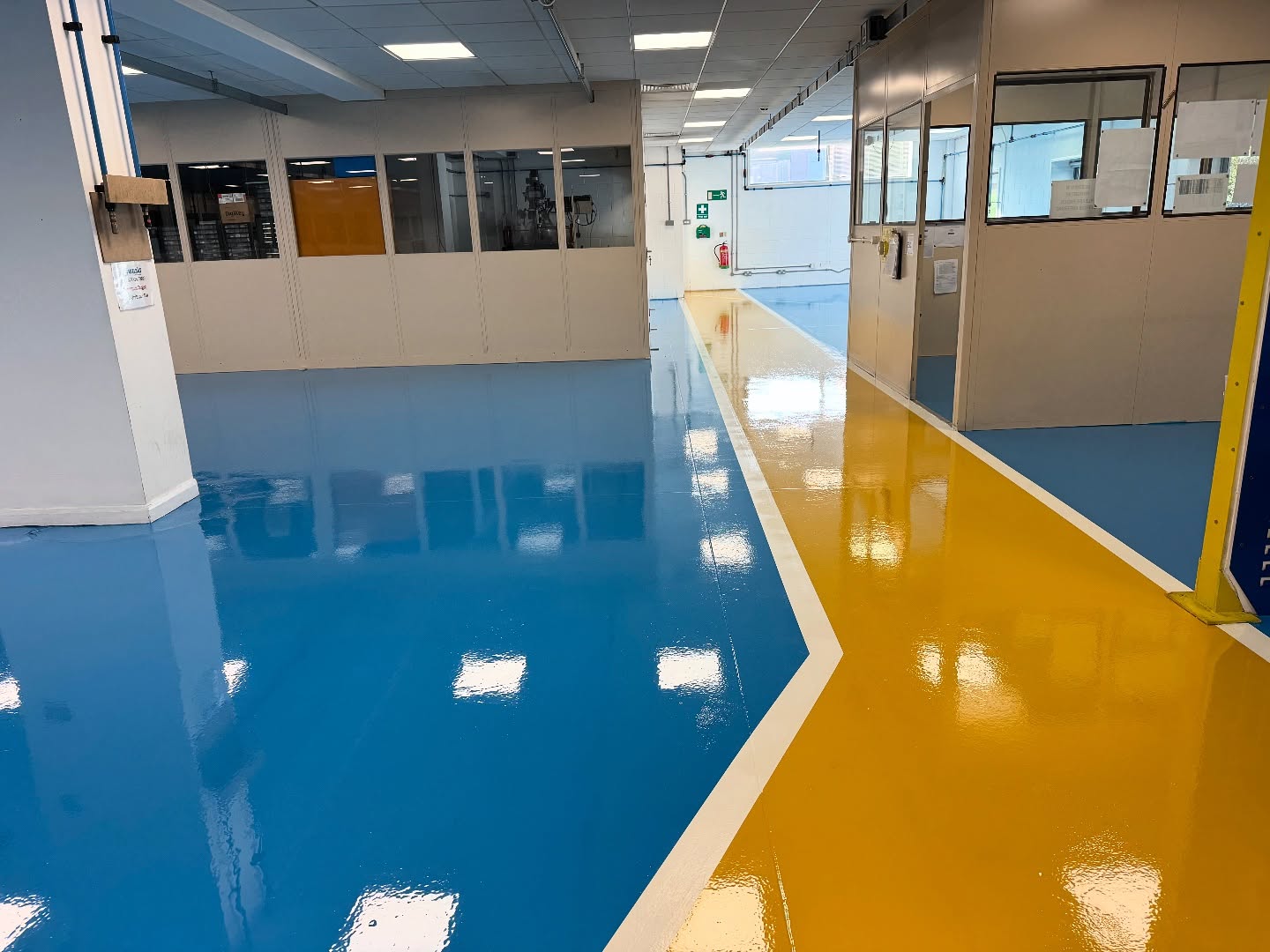
Data Centre Flooring
Specialist data centre flooring contractors installing ESD-safe polymer, epoxy and polyurethane resin systems for server rooms, colocation facilities and hyperscale data centres across the UK.
For tendering enquiries, please email info@angliadecor.co.uk
Data Centre Flooring Requirements and Why They Matter
Data centres are sensitive environments that demand flooring engineered to meet very specific operational, safety and environmental requirements. The floor beneath server racks, cooling infrastructure and networking equipment is not just a surface to walk on, it is a critical component of the facility's infrastructure. Get the flooring wrong and you face electrostatic discharge damaging server components, uneven load distribution cracking concrete beneath multi-tonne rack arrays, poor airflow undermining cooling efficiency, and fire safety non-compliance that can shut a facility down.
Weight distribution is the first consideration. A single fully loaded server cabinet weighs between 800 kg and 1,500 kg, and data centres house hundreds of them in concentrated rows. Standard concrete slabs were never designed for this kind of point-loading. The flooring system must distribute weight evenly across the substrate to prevent structural cracking, deflection and long-term settlement. Reinforced polymer screeds and high-build epoxy systems at 4 to 9 mm thickness handle these loads without degradation, and Anglia Decor specifies every installation based on the actual rack weights, spacing and future expansion plans for the facility.
Electrostatic discharge (ESD) protection is non-negotiable. A static discharge of just 20 to 30 volts can destroy sensitive electronic components, corrupt data and cause hardware failures that cost thousands per incident. Data centre flooring must incorporate anti-static properties, either dissipative (surface resistance 1 × 10⁶ to 1 × 10⁹ ohms) or conductive (below 1 × 10⁶ ohms), to safely channel charge to earth through embedded copper tape grids and conductive primers. Every Anglia Decor installation is tested zone by zone with calibrated resistance meters and certified to BS 2050 and EN 1081 before handover.
Thermal management is the third critical factor. Modern data centres generate enormous heat loads, and airflow management, particularly through raised access floor systems and underfloor plenums, is fundamental to cooling efficiency. Flooring materials must offer good thermal conductivity to support consistent temperature regulation. Poor thermal performance creates hotspots that degrade equipment lifespan and increase cooling energy costs. Fire safety completes the picture: data centre flooring must meet strict fire resistance classifications, using non-combustible materials that provide containment time for evacuation and equipment shutdown. Anglia Decor specifies all systems to comply with UK building codes, fire safety regulations and industry standards for data centre infrastructure.
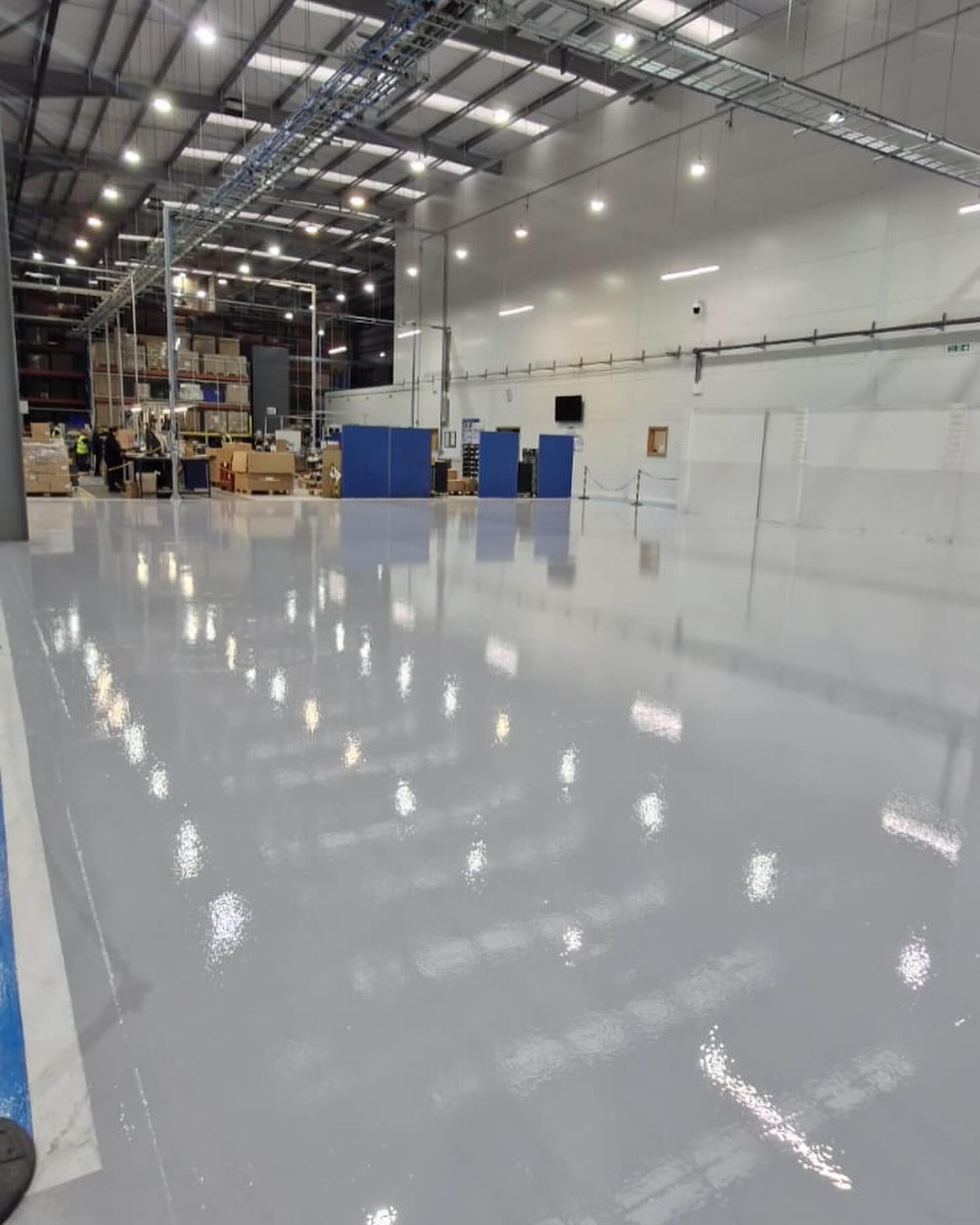
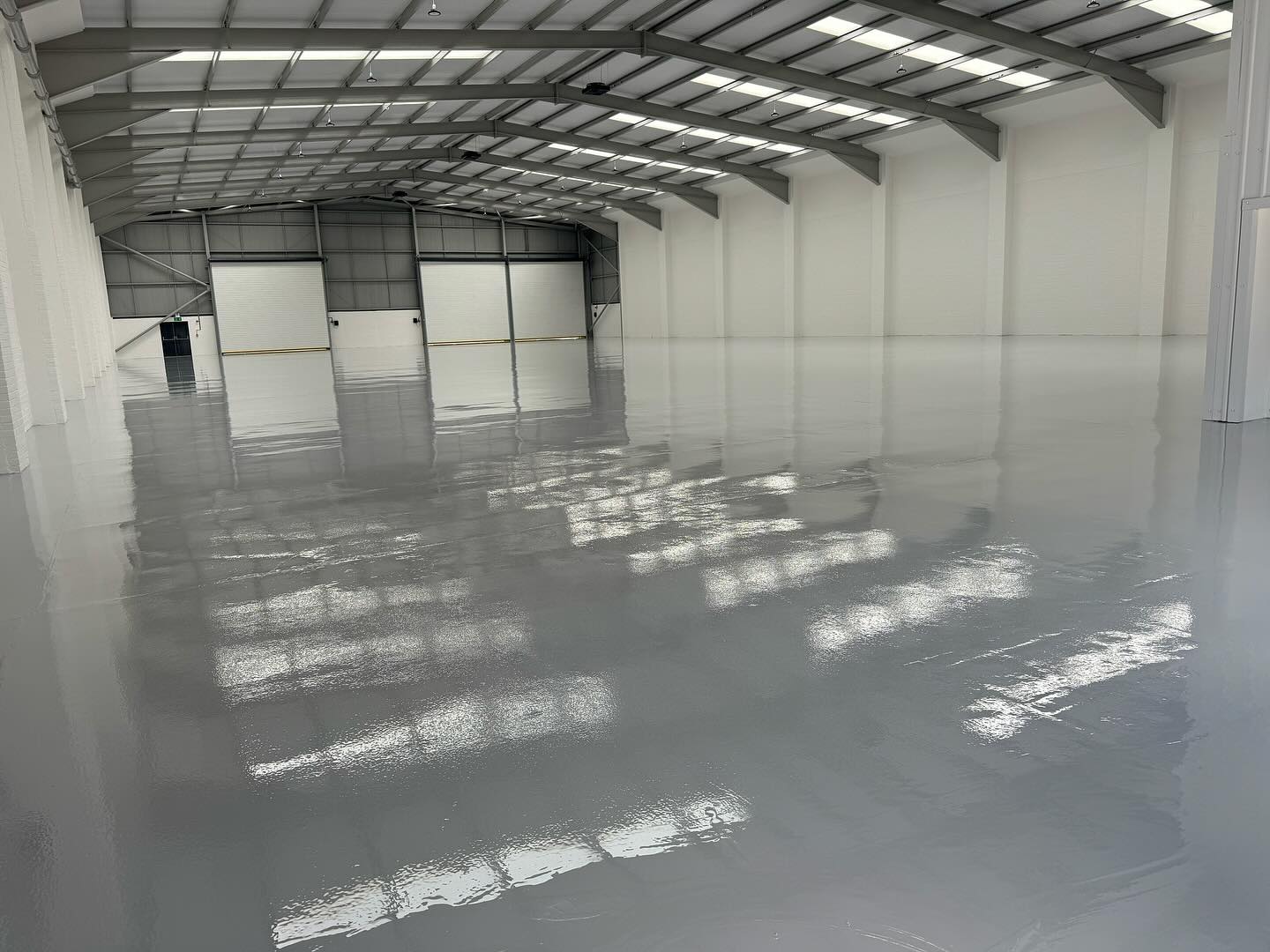
Polymer Flooring Systems for Data Centres
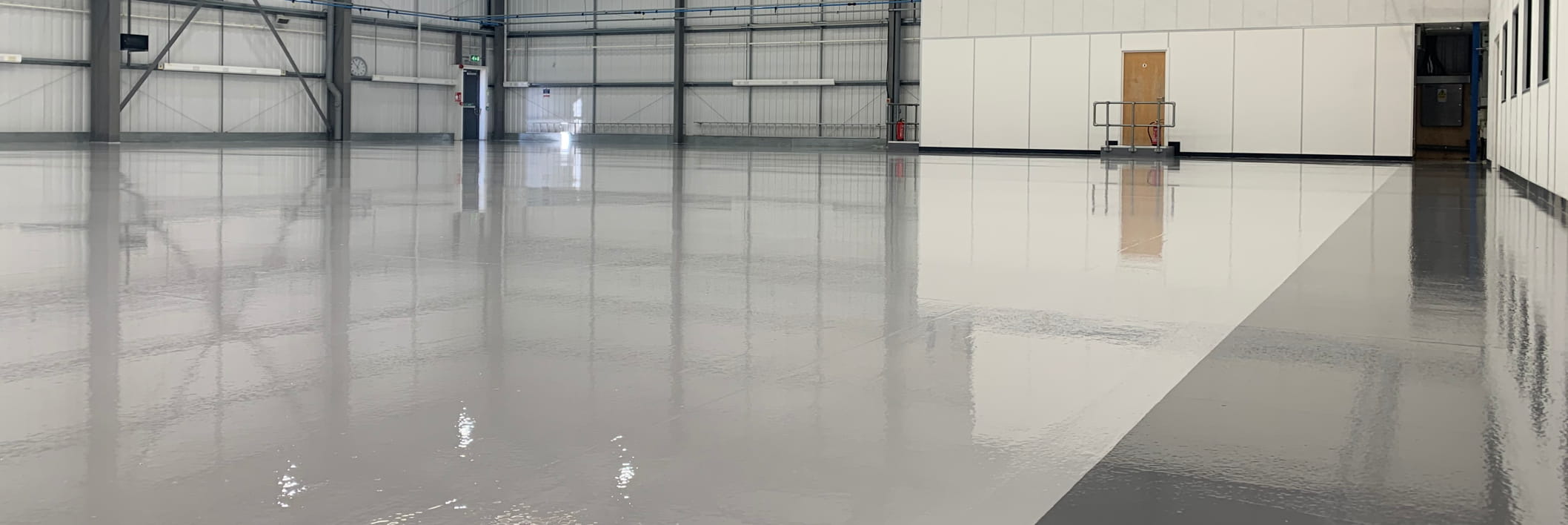
Polymer flooring systems are the industry standard for modern data centres because they deliver what traditional flooring materials cannot: seamless surfaces with integrated ESD control, heavy-load capacity, chemical resistance and dust-free performance in a single system. Unlike vinyl tiles that degrade at seams, or concrete that generates dust particles harmful to server equipment, polymer resin floors create a monolithic, non-porous barrier that protects both the substrate and the equipment above it.
Epoxy resin flooring is the most widely specified polymer system for data centres. Its durability, chemical resistance and ease of maintenance make it the default choice for server rooms and colocation facilities with stringent cleanliness requirements. Epoxy systems are applied seamlessly at 2 to 4 mm thickness, eliminating joints where dust accumulates and moisture penetrates. The smooth, non-porous surface facilitates rapid cleaning, critical in environments where particulate contamination can damage server fans, cooling systems and sensitive circuit boards. Epoxy resin can be specified with integrated anti-static properties using conductive additives and copper earthing tape, delivering ESD protection without requiring separate anti-static mats or tiles.
Polyurethane resin flooring offers exceptional elasticity, making it highly resistant to impact damage from equipment moves, trolley traffic and dropped tools during maintenance operations. Its resistance to chemicals, oils and cleaning agents means accidental spills during equipment servicing do not compromise the floor's integrity. Polyurethane systems tolerate significant temperature variations, valuable in facilities where localised hot and cold zones are part of the cooling architecture. Like epoxy, polyurethane floors are seamless and can be specified with anti-static properties.
Methyl methacrylate (MMA) flooring is the rapid-deployment option for data centres where downtime is commercially unacceptable. MMA systems cure fully within 1 to 2 hours, compared to 24 to 72 hours for epoxy, making them the specification of choice for retrofit projects in live facilities where server operations cannot stop. MMA delivers excellent wear resistance, chemical tolerance and substrate adhesion across a range of surface types. All three polymer systems, epoxy, polyurethane and MMA, can be customised with colour coding for zoning, wayfinding and safety demarcation across different areas of the data centre.
View Some of Our Flooring Work
Swipe to see more images

Planning a Data Centre Flooring Project?
ESD-certified, heavy-load-rated polymer systems designed specifically for server rooms and data centres. Free site survey.
How It Works
Our straightforward process ensures you get the right solution with minimum hassle
Site Survey & Load Assessment
Evaluate substrate condition, rack weights, ESD requirements and airflow configuration.
System Specification
Select the right polymer system, epoxy, polyurethane or MMA, with ESD and fire ratings.
Surface Preparation
Diamond grind or shot blast to profile, install copper earthing grid and conductive primer.
Installation & Certification
Apply polymer system, test ESD compliance zone by zone, and hand over with full documentation.
For tendering enquiries, please email info@angliadecor.co.uk
Why Businesses Trust Anglia Decor for Data Centre Flooring
Trusted by businesses across the UK for expert, reliable service
ESD-Certified Installations
Every floor tested to BS 2050 and EN 1081 with resistance certificates at handover.
Heavy-Load Specification
Systems engineered for concentrated server rack loads of 800 kg to 1,500 kg per cabinet.
Data Centre Experience
Server rooms, colocation facilities and critical infrastructure across the UK.
Minimal Downtime
MMA rapid-cure options for live facilities. Phased installation around your operations.
Seamless & Dust-Free
Non-porous polymer surfaces that eliminate particulate contamination risks.
Full Documentation
ESD test reports, fire safety compliance, load specifications and maintenance guidance.
Case Studies
Real projects delivered by Anglia Decor. See the work we've completed for businesses like yours.
Trusted by leading brands






Frequently Asked Questions
What flooring is best for a data centre?
Polymer resin flooring, specifically epoxy, polyurethane or MMA systems with integrated anti-static (ESD) protection. These systems deliver seamless, dust-free surfaces that handle heavy server rack loads, control electrostatic discharge, resist chemicals from maintenance activities, and meet fire safety requirements. The best choice depends on your facility's specific load profile, downtime tolerance and environmental conditions.
Why do data centres need anti-static flooring?
Electrostatic discharge (ESD) can destroy sensitive electronic components with as little as 20 to 30 volts, well below the threshold a person can feel. Anti-static flooring provides a continuous conductive pathway through the floor to earth, safely dissipating charge before it can accumulate and discharge into server hardware. Without ESD-controlled flooring, data centres face equipment damage, data corruption and unplanned downtime.
What is the weight capacity of data centre flooring?
Data centre polymer flooring systems are specified to handle concentrated point loads from server racks weighing 800 kg to 1,500 kg each. Anglia Decor specifies system thickness and substrate reinforcement based on actual rack weights, spacing patterns and future expansion plans. High-build epoxy and polyurethane screeds at 4 to 9 mm thickness distribute these loads evenly without cracking or deflection.
Can data centre flooring be installed in a live facility?
Yes. MMA (methyl methacrylate) resin systems cure in 1 to 2 hours, allowing phased installation in operational data centres without shutting down server operations. We section the floor into zones and work through them sequentially so equipment in other zones remains live throughout. Weekend and overnight installations are standard for time-critical facilities.
How does data centre flooring help with cooling and airflow?
Polymer flooring with good thermal conductivity supports consistent temperature regulation across the server hall. In raised access floor configurations, the flooring system works with the underfloor plenum to distribute cold air efficiently to equipment. Poor thermal performance in the flooring creates hotspots that degrade server lifespan and increase cooling energy costs significantly.
What fire safety standards must data centre flooring meet?
Data centre flooring in the UK must comply with Building Regulations Part B (fire safety), using materials classified to the required reaction-to-fire standards. Anglia Decor specifies non-combustible and fire-resistant polymer systems that provide containment time for evacuation and controlled equipment shutdown in fire scenarios. All specifications include fire resistance documentation.
How long does data centre flooring installation take?
A typical server room of 200 to 500 m² takes 4 to 6 working days for epoxy or polyurethane systems, including surface preparation, copper earthing grid installation, and multi-coat application. MMA rapid-cure systems can reduce this to 2 to 3 days. Phased installation in live facilities takes longer overall but minimises operational disruption at each stage.
How much does data centre flooring cost?
Data centre polymer flooring typically costs £45 to £120 per m² depending on system type, ESD specification, substrate condition and facility access constraints. Epoxy systems are at the lower end, polyurethane mid-range, and MMA rapid-cure at the higher end. Every quote includes surface preparation, copper earthing grid, multi-coat application, ESD testing and certification.

Ready to Start Your Data Centre Flooring Project?
Our data centre flooring specialists will assess your facility and provide a tailored solution with minimal downtime.