Laboratory Flooring
Specialist laboratory flooring contractors installing chemical-resistant epoxy and resin systems for research labs, clean rooms and pharmaceutical facilities.
For tendering enquiries, please email info@angliadecor.co.uk
Laboratory Resin Flooring Systems and Specification Service
Laboratory floors must resist a wider range of chemicals than almost any other industrial environment. Concentrated acids, organic solvents, biological agents, reagent spills, staining compounds, often on the same floor within the same day. Standard concrete absorbs those chemicals instantly, stains permanently, and becomes a contamination source. Vinyl and linoleum resist some chemicals but fail under concentrated solvents and cannot be made truly seamless. Epoxy resin flooring delivers the broad-spectrum chemical resistance, seamless surface integrity, and dust-free performance that laboratory environments demand.
Epoxy systems at 2 to 3mm self-levelling thickness are the standard specification for general research and teaching laboratories. The non-porous surface resists staining from reagents, prevents absorption of biological material, and cleans easily with laboratory-grade disinfectants. For laboratories handling concentrated acids, aggressive solvents, or high-volume chemical storage, chemical resistant flooring systems using PU resin screed or vinyl ester resins provide enhanced protection against chemical groups that standard epoxy cannot withstand, fuming nitric acid, glacial acetic acid, methylene chloride, and acetone among them.
Specialist laboratory requirements extend beyond chemical resistance. Anti-static (ESD) resin floors are specified for electronics research labs, clean rooms handling semiconductors, and any laboratory where static discharge could damage sensitive instruments or ignite flammable solvents. Hygienic, seamless finishes meeting ISO 14644 clean room standards are specified for pharmaceutical and biomedical labs. Anti-microbial additives can be incorporated into the resin matrix for microbiology and pathology laboratories where surface contamination control is a regulatory requirement. Anglia Decor specifies the resin chemistry, thickness, surface finish, and functional additives based on the laboratory's specific chemical inventory, clean room classification, and regulatory framework.
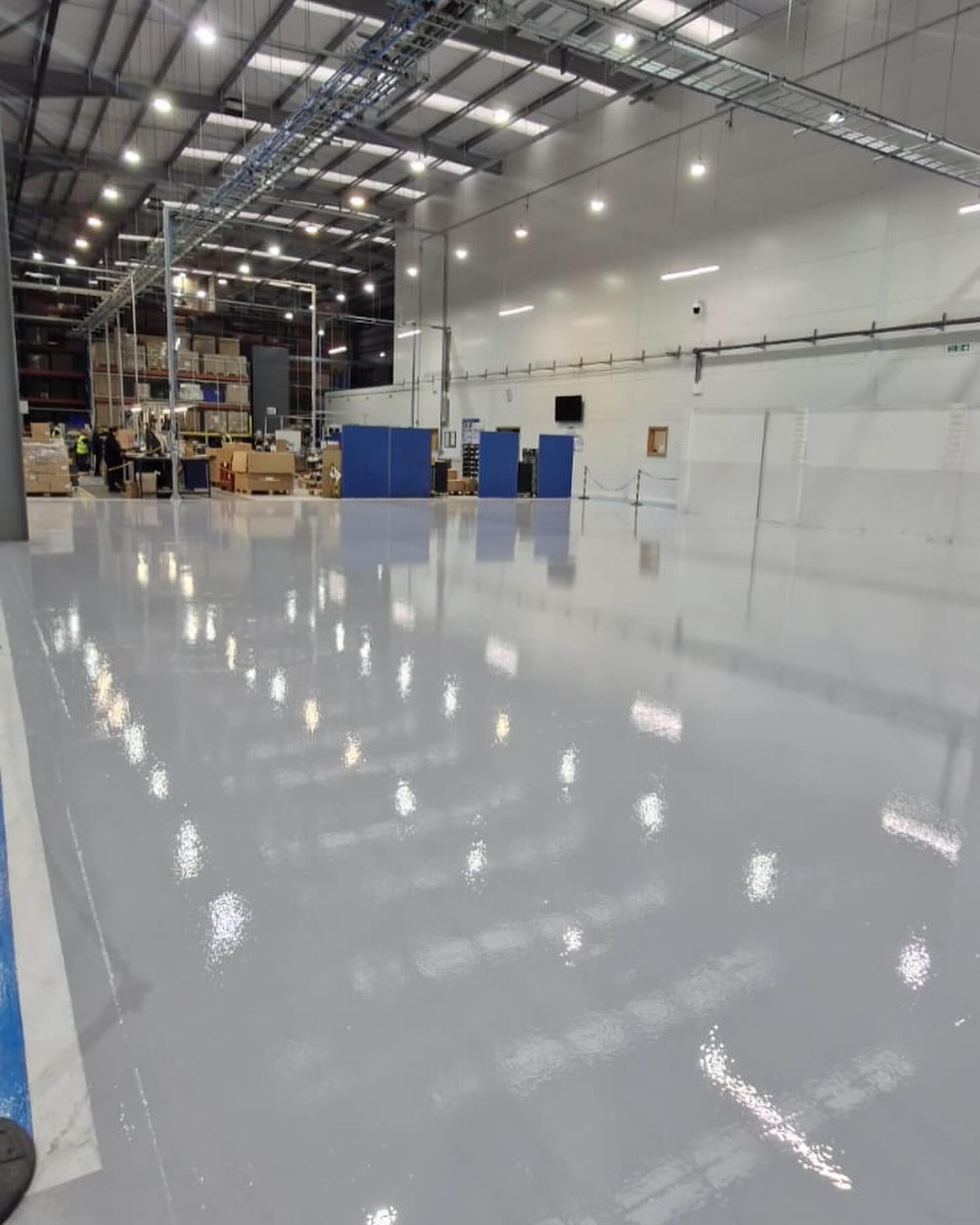
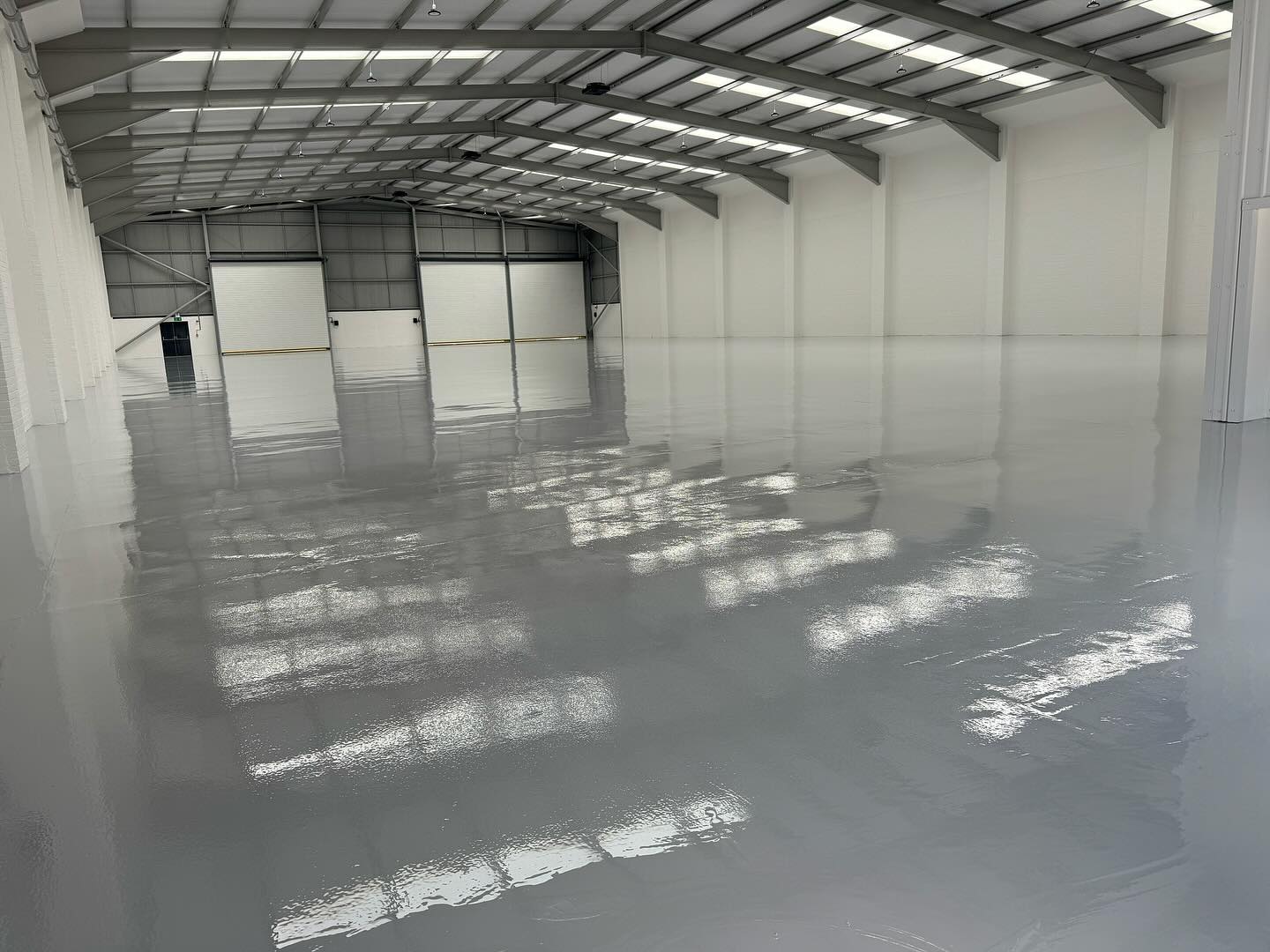
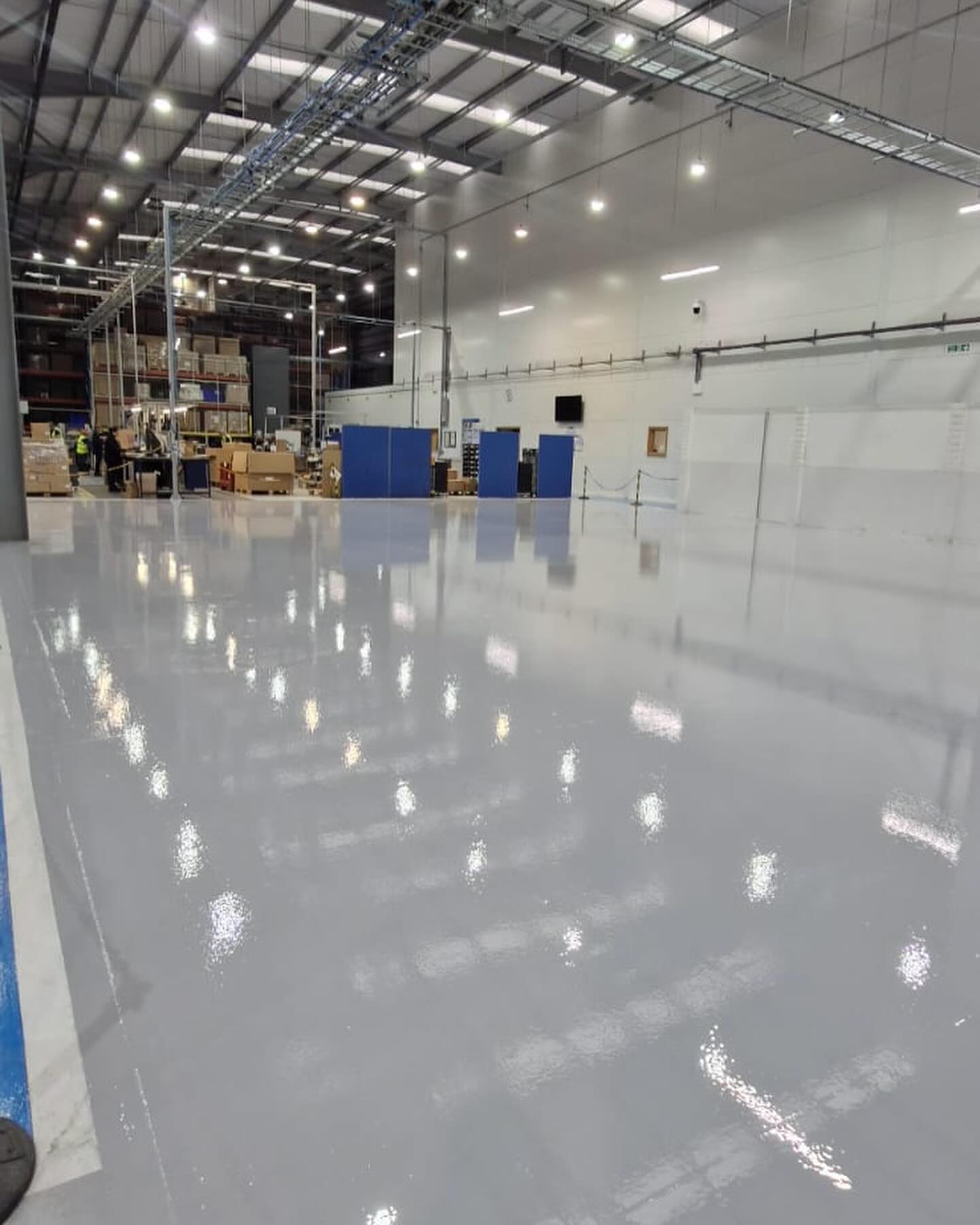
Lab Floor Installation by Specialist Contractors
Laboratory floor installation requires contamination control during the works. Dust from surface preparation, fumes from resin application, and physical disruption from equipment must be contained to prevent interference with adjacent laboratory operations. Anglia Decor installs sealed barriers between the work zone and live labs, runs HEPA-filtered dust extraction during grinding and shot blasting, and uses low-odour resin systems where sensitive research is ongoing in neighbouring rooms. Installation is typically scheduled during university holidays, planned facility shutdowns, or laboratory relocation periods to minimise disruption.
Surface preparation follows FeRFA standards. Diamond grinding or shot blasting removes old coatings, adhesive residue, and surface contamination. The concrete is profiled to the correct surface roughness for the specified resin system. Moisture is tested and managed, laboratory buildings with ground-floor slabs or basements often have significant moisture that must be treated with a moisture-tolerant primer or damp-proof membrane. The resin system is applied in sequence: primer, body coat (1 to 3 layers depending on thickness), and seal coat. Anti-slip aggregate is broadcast into the body coat in wet areas around sinks, fume cupboards, and wash-down stations. Cove bases are installed at wall junctions in clean rooms and GMP-regulated labs.
Anglia Decor has installed laboratory floors in university research departments, NHS pathology labs, pharmaceutical R&D suites, veterinary diagnostic laboratories, private sector testing facilities, and government research establishments. Each installation is documented with chemical resistance data for the specified resin system, surface finish verification, and, where required, anti-static certification with resistance test values confirming compliance with BS 2050 and EN 1081. A standard epoxy laboratory floor delivers 12 to 15 years of service life with periodic seal coat renewal. PU resin screed and vinyl ester systems in high-chemical-exposure labs deliver similar lifespans with enhanced chemical protection.
View Some of Our Flooring Work
Swipe to see more images

Laboratory Floor Project?
Chemical-resistant, anti-static, clean room compatible. Free site survey and specification.
How It Works
Our straightforward process ensures you get the right solution with minimum hassle
Lab Survey & Chemical Inventory
Assess chemical exposure, clean room class, and ESD requirements.
Resin Specification
Select epoxy, vinyl ester, or PU resin screed system with functional additives.
Contamination-Controlled Preparation
HEPA-filtered grinding with sealed barriers to adjacent labs.
Installation & Certification
Apply resin system with chemical resistance and ESD documentation.
For tendering enquiries, please email info@angliadecor.co.uk
Why Businesses Trust Anglia Decor for Laboratory Flooring
Trusted by businesses across the UK for expert, reliable service
Laboratory Flooring Specialists
University, NHS, pharmaceutical, and government lab experience.
Broad Chemical Resistance
Epoxy, vinyl ester, and PU resin screed systems for any chemical profile.
Anti-Static Options
ESD-certified systems for electronics labs and clean rooms.
Clean Room Compatible
ISO 14644 compliant seamless finishes.
Contamination Control
HEPA-filtered installation to protect adjacent research.
Scheduled Around Research
Holiday and shutdown installations to minimise disruption.
Case Studies
Real projects delivered by Anglia Decor. See the work we've completed for businesses like yours.
Trusted by leading brands






Frequently Asked Questions
What type of flooring is best for a laboratory?
Epoxy resin at 2 to 3mm self-levelling thickness is the standard for general research and teaching laboratories. PU resin screed or vinyl ester systems are specified for labs handling concentrated acids and aggressive solvents. Anti-static variants are used in electronics research and clean rooms.
Is laboratory flooring chemical resistant?
Yes. Epoxy resin resists a broad range of laboratory chemicals including dilute acids, alkalis, reagents, and common solvents. For concentrated acids (fuming nitric, glacial acetic) and aggressive solvents (acetone, methylene chloride), specialist vinyl ester or PU resin screed systems provide enhanced resistance.
Can laboratory flooring be anti-static?
Yes. ESD (electrostatic dissipative) resin systems incorporate conductive additives and copper earthing tape to safely dissipate static charge to earth. These are specified for electronics labs, clean rooms, and any laboratory where static discharge could damage instruments or ignite flammable solvents.
Does laboratory flooring meet clean room standards?
Yes. Seamless epoxy and polyurethane resin floors meet ISO 14644 clean room classifications. The non-porous, dust-free surface prevents particulate generation and resists chemical contamination from cleaning agents. Cove bases and sealed penetrations complete the monolithic clean room envelope.
How long does laboratory flooring take to install?
A typical 200 to 500 m² laboratory floor takes 5 to 8 working days from surface preparation through to full cure. Epoxy requires 24 hours before light foot traffic and 5 to 7 days before full chemical cure. Installation is scheduled around lab operations to minimise research disruption.
How long does laboratory resin flooring last?
Standard epoxy laboratory floors last 12 to 15 years. High-build solvent-free epoxy and vinyl ester systems in high-chemical-exposure labs deliver similar lifespans with enhanced protection. Lifespan depends on chemical exposure intensity, cleaning frequency, and traffic. Periodic seal coat renewal extends service life.

Ready to Start Your Laboratory Flooring Project?
Our laboratory flooring specialists will assess your facility and provide a tailored solution with minimal downtime.