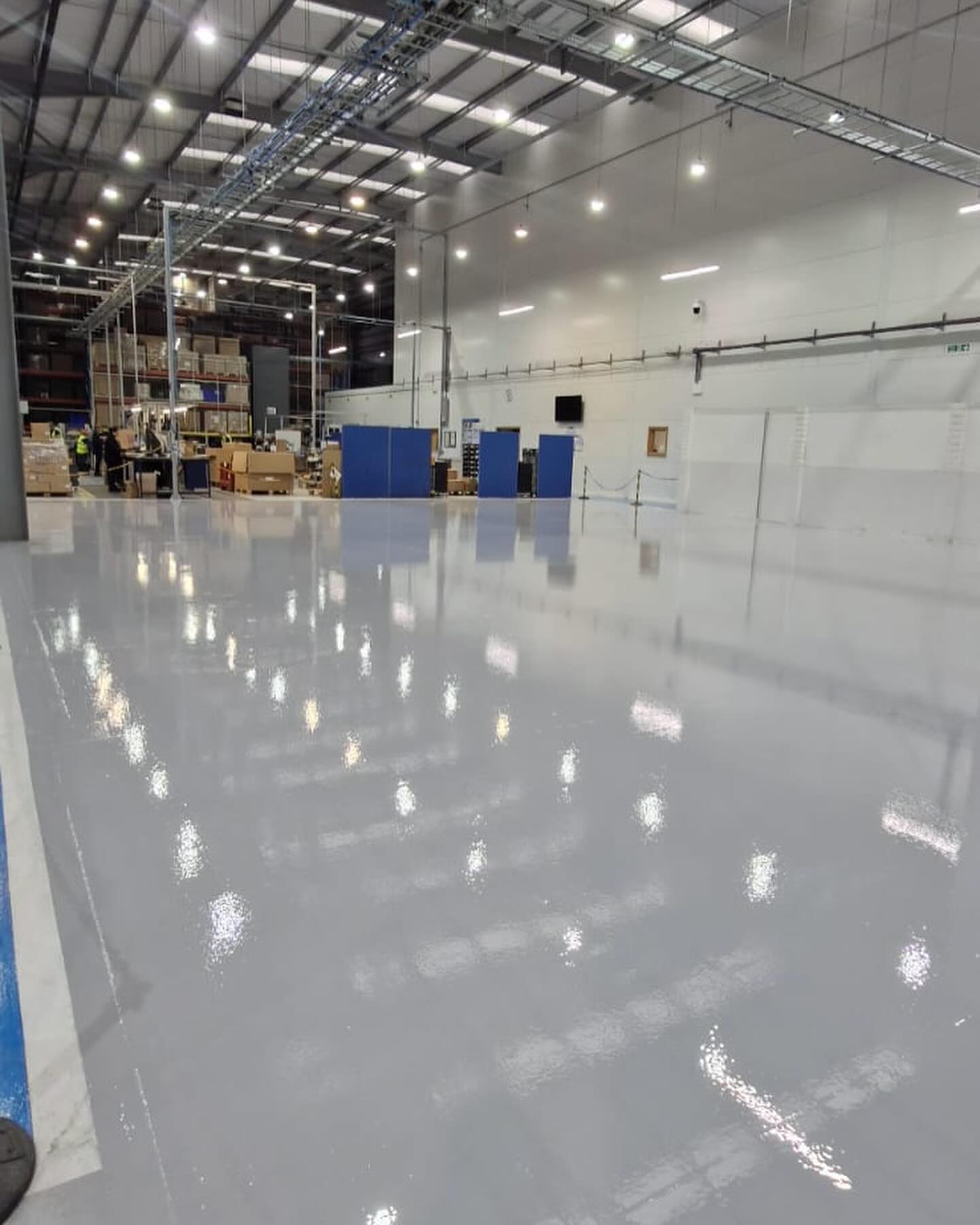
Resin Flooring Contractors UK
Anglia Decor are specialist resin flooring contractors installing epoxy, polyurethane and MMA systems in warehouses, factories and commercial buildings across the UK. We spec the right system for your facility and install it to FeRFA standards so it lasts 15 to 20 years.
For tendering enquiries, please email info@angliadecor.co.uk
Industrial Resin Flooring Systems and Specification
Industrial concrete floors see constant punishment: machine foot traffic, chemical spills from manufacturing processes, moisture ingress from wash-down and humidity, thermal cycling in food storage, abrasion from equipment wheels, and impact loading from dropped pallets. Bare concrete can't handle that. It cracks, dusts, absorbs liquids, and becomes a safety liability within months. A resin flooring system bonds to the prepared slab and forms a seamless, non-porous surface that outlasts bare concrete by a decade or more.
Three resin system types dominate industrial flooring. Epoxy resin is the workhorse. Fast-curing, chemically resistant, rigid, and cost-effective for general factory, warehouse, and food production environments. Polyurethane (PU) systems offer superior elasticity, impact absorption, and flexibility, making them the choice for facilities with thermal movement, machinery vibration, or heavy rolling loads. Polyurethane flooring also tolerates moisture better than epoxy, which matters in damp basements, underground car parks, and wash-down areas. MMA (methyl methacrylate) cures in hours instead of days, letting high-traffic facilities return to full use overnight. Critical for food production, pharmaceutical, and retail environments where downtime costs money. MMA flooring is also unaffected by temperature and UV, making it suitable for outdoor loading bays and temperature-sensitive production areas.
Resin thickness is specified in microns (thousandths of a millimetre) and must match the environment's mechanical and chemical demands. Standard industrial coatings run 300 to 400 microns (a high-build 2-coat or 3-coat epoxy), and suit light to medium machinery, assembly lines, and warehouses. Heavy-duty multi-layer systems reach 2 to 3 millimetres for factories with forklift traffic, chemical spillage, or thermal extremes. Self-levelling resin screeds classified as FeRFA Type 5 or Type 7 reach 4 to 6 millimetres and are specified where the substrate is severely uneven or where maximum durability is non-negotiable.
Resin Floor Installation by Specialist Contractors
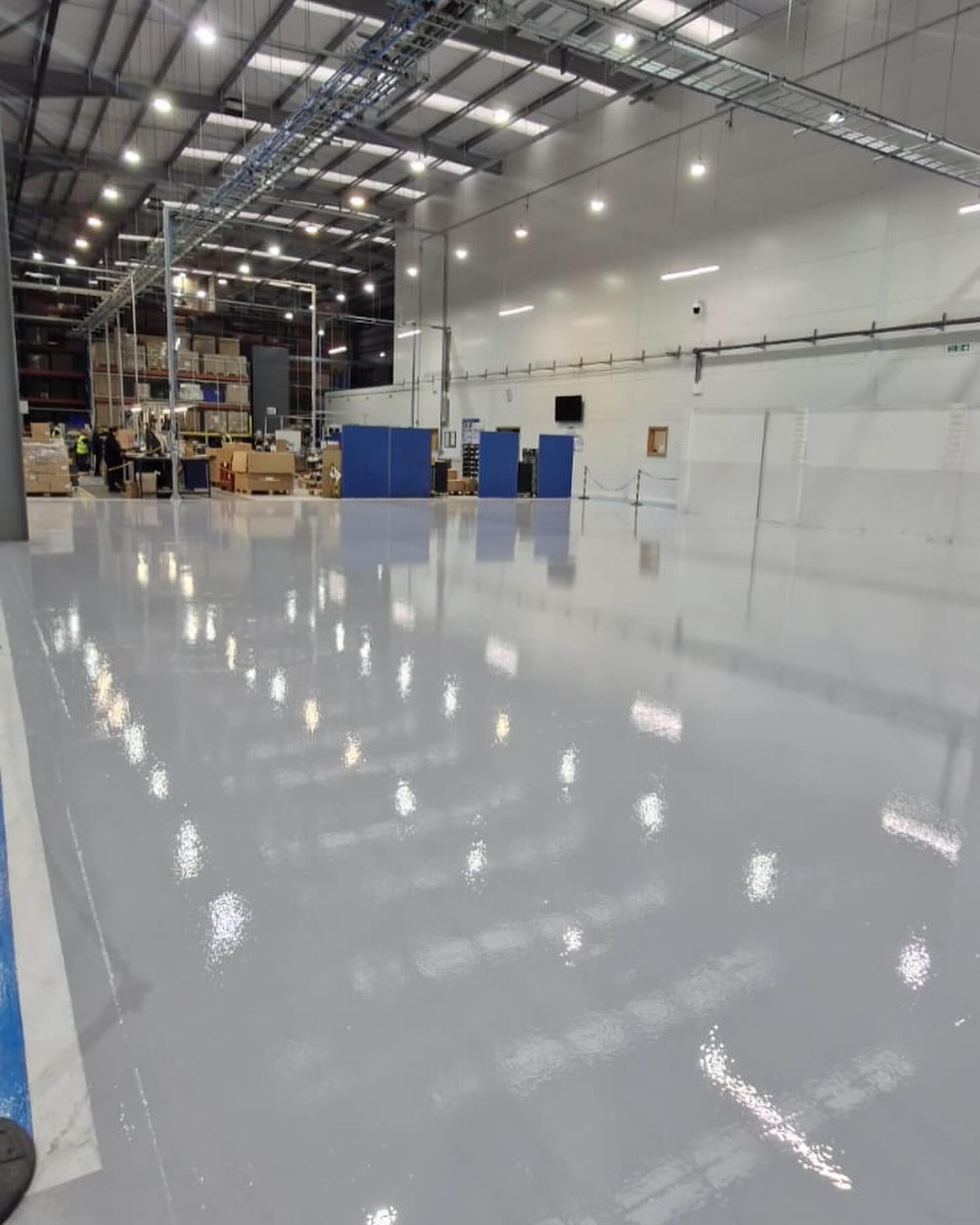
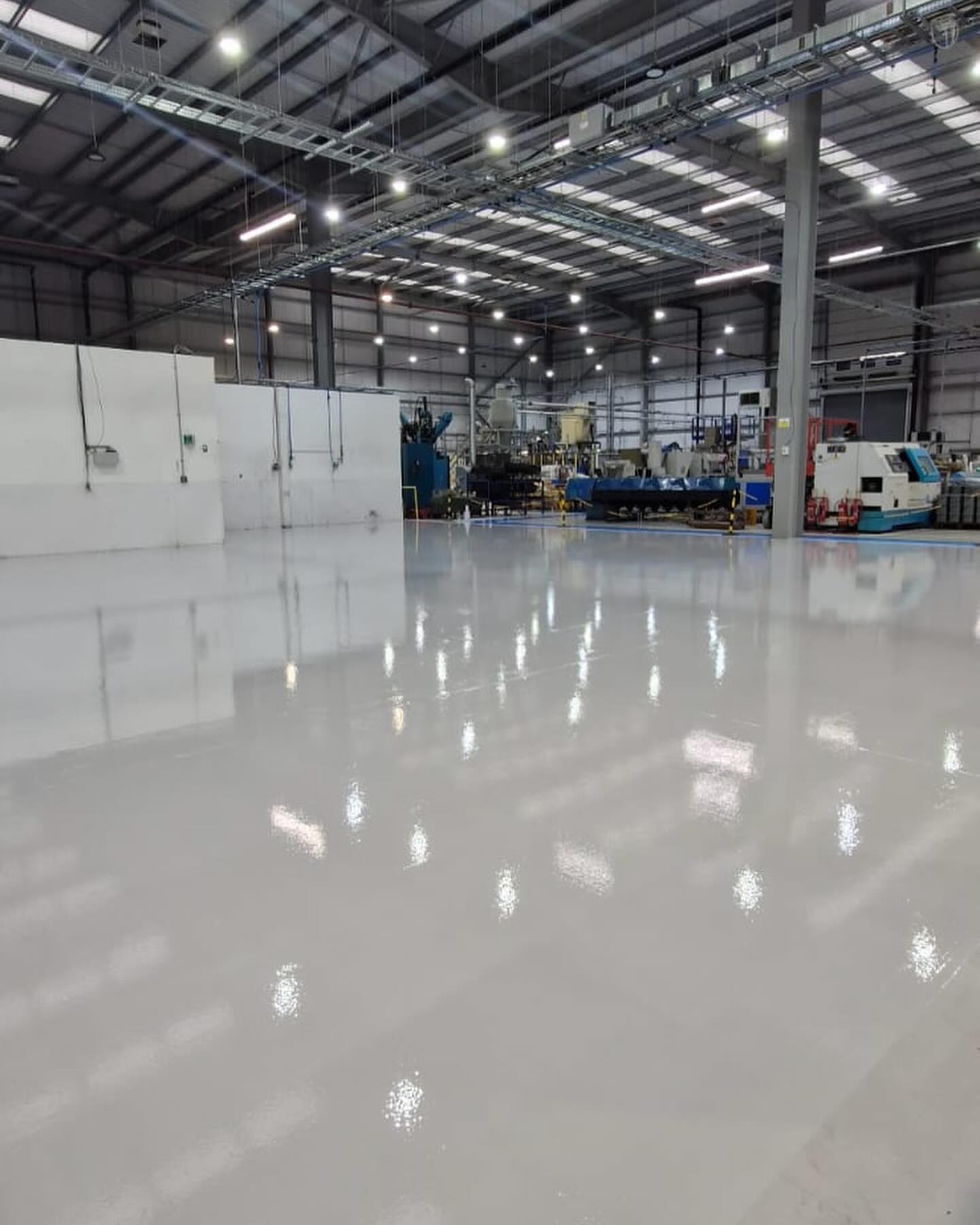
Resin flooring success starts with proper surface preparation. Diamond grinding, shot blasting, or scarifying removes the top layer of concrete, all loose material, old coatings, contaminants, and dust. That preparation opens the concrete's pore structure, creates a mechanical key for the resin to bond to, and fills or repairs cracks so the substrate is flat and sound. When moisture is detected (common in ground-floor slabs and below-grade areas), a damp-proof membrane is laid before any coating to prevent moisture vapour pushing the resin off the concrete. Anglia Decor profiles every slab to FeRFA (Resin Flooring Association) standards before coating, which is why floors installed to their specification stay in service 15 to 20 years. Cut corners on prep and the system fails within years.
Installation follows a strict sequence once the substrate is ready. A primer suited to the concrete condition and moisture level is applied first, then 1 to 3 body coats depending on the thickness spec, and finally a seal coat if chemical or wear resistance needs to be enhanced. Each coat must cure fully before the next is applied. Typically 24 hours at room temperature for epoxy. Light foot traffic is possible within 24 hours of the final coat, but heavy warehouse equipment, forklifts, and machinery should not run on the floor for 72 hours to allow full cure. MMA systems cut that window to 4 to 6 hours, which explains why food production and pharmaceutical plants specify MMA for minimal downtime.
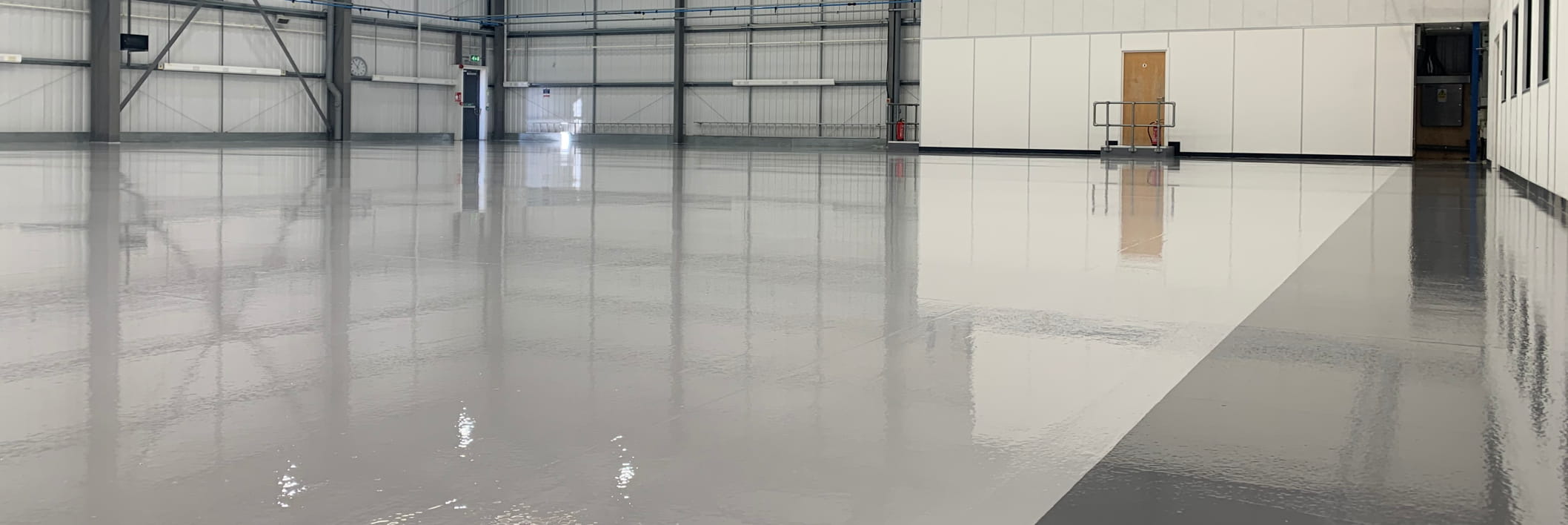
Anglia Decor specifies resin floors across manufacturing, food, pharmaceutical, aerospace, data centres, and distribution facilities. On newly built warehouses, we install resin floors once the slab has cured. Surface finishes range from textured anti-slip aggregate for slip-prone areas to high-gloss or satin for showroom-quality results. Colour coding, demarcation lines, and safety markings are applied directly into the resin finish during installation, so walkways, equipment zones, chemical storage areas, and emergency routes stay clearly marked throughout the floor's life. The seamless, dust-free surface makes cleaning faster and more effective. Especially critical in food production where hygiene audits are non-negotiable and in pharmaceutical plants where contamination is not an option.
Watch Our Resin Flooring Work
How It Works
Our straightforward process ensures you get the right solution with minimum hassle
Site Survey & Assessment
We visit to assess concrete condition and specific requirements.
Specification & Planning
Match resin system to your traffic and exposure, provide fixed pricing.
Surface Preparation
Diamond grinding, cleaning, and priming for optimal adhesion.
Resin Application & Finishing
Professional installation with anti-slip finish and curing management.
For tendering enquiries, please email info@angliadecor.co.uk
Why Businesses Trust Anglia Decor for Resin Flooring
Trusted by businesses across the UK for expert, reliable service
Resin Flooring Specialists
Extensive experience with epoxy, polyurethane, and MMA systems.
Seamless & Durable
Jointless finish resists chemicals, abrasion, and heavy traffic.
Fast Return to Service
Quick curing times,minimal downtime for your operations.
Anti-Slip Options
Safety finishes available for slippery environments.
Custom System Selection
We match the right resin type to your specific application needs.
Professional Installation
Expert preparation and application for maximum durability.
Case Studies
Real projects delivered by Anglia Decor. See the work we've completed for businesses like yours.
Trusted by leading brands






Frequently Asked Questions
How long does resin flooring last?
Standard industrial resin coatings last 10 to 15 years with normal maintenance. Heavy-duty multi-layer systems with thicker build specifications (4mm+) can reach 20+ years. Lifespan depends on traffic intensity, chemical exposure, and how well the floor is cleaned and maintained.
What thickness of resin flooring do I need?
Light assembly and warehouse spaces work with 300 to 400 microns (standard 2-coat or 3-coat epoxy). Heavy forklift traffic, machinery impact, or chemical exposure demands 2 to 3 millimetres. Severely uneven substrates need 4 to 6 millimetre self-levelling screeds. Anglia Decor specifies thickness during the site survey based on your actual facility demands.
How much surface preparation does resin flooring need?
Full preparation is essential. Diamond grinding or shot blasting, crack filling, levelling, and moisture testing. Rushed or skipped prep is the main reason resin floors fail. FeRFA-standard preparation typically takes 30 to 50% of the total project time but is non-negotiable for durability.
Can you install resin flooring while the factory is running?
Yes. Anglia Decor schedules phased rollouts across different zones, works nights and weekends, and can install MMA systems (4 to 6 hour cure) when downtime must be kept to a minimum. Epoxy and polyurethane require 72 hours before heavy machinery returns, so planning around production shutdowns is typical.
Does resin flooring handle forklift and machinery traffic?
Polyurethane and heavy-duty epoxy screeds (2-3mm+) handle continuous forklift traffic, rolling load equipment, and machinery vibration without cracking or breaking down. The type and thickness of resin must match your actual traffic patterns. Lighter-build epoxy suits occasional forklifts but not daily warehouse operations.
How do I choose between epoxy, polyurethane, and MMA?
Epoxy is cost-effective and durable for dry, low-moisture environments. Polyurethane suits damp areas, thermal movement, and vibration-heavy machinery. MMA cures in hours (ideal for food and pharma where downtime is costly) and handles temperature extremes. Site moisture, cure time tolerance, and chemical exposure drive the choice.
Is resin flooring hygienic for food production and pharmaceuticals?
Yes. Resin creates a seamless, non-porous surface with no crevices for bacteria or contaminants to hide. Hygienic finishes are standard in food production, pharmaceutical, and clean-room facilities. Anti-slip aggregate can be tuned to food safety standards, and the surface is easy to clean and sanitise daily.


Ready to Start Your Resin Flooring Project?
Our resin flooring specialists will assess your facility and provide a tailored solution with minimal downtime.