
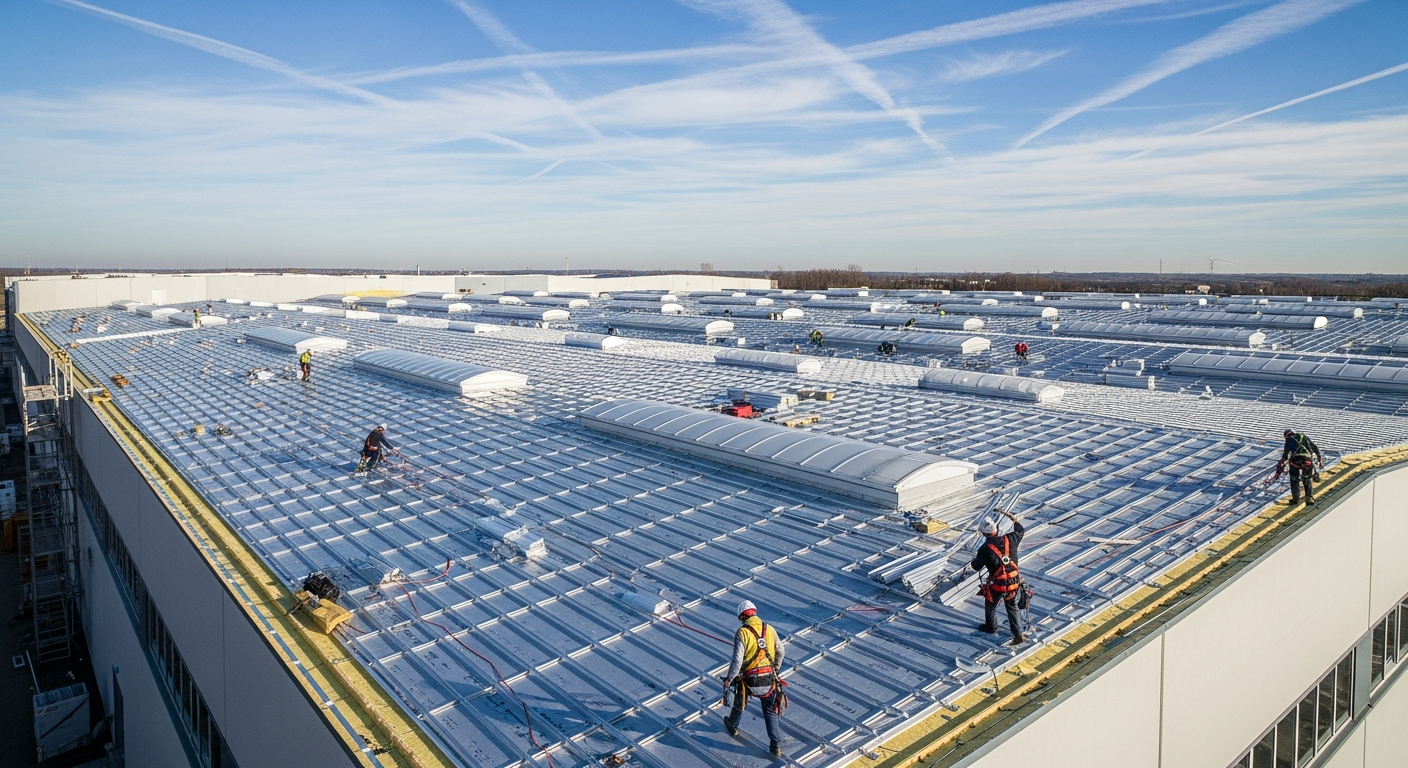
For most new industrial buildings, an insulated composite roof, also called a built up or standing seam system, offers the best balance of weather protection, insulation, and lifespan. The right choice depends on the building's use, the insulation target, and the budget.
What are the main roof options?
Composite, or sandwich, panels combine an insulated core between two metal skins in a single sheet, which makes them fast to install and thermally efficient. Built up systems install the layers separately on site, giving more flexibility on specification. Single ply membranes suit flatter roofs. Each has its place on the right building.
How important is insulation?
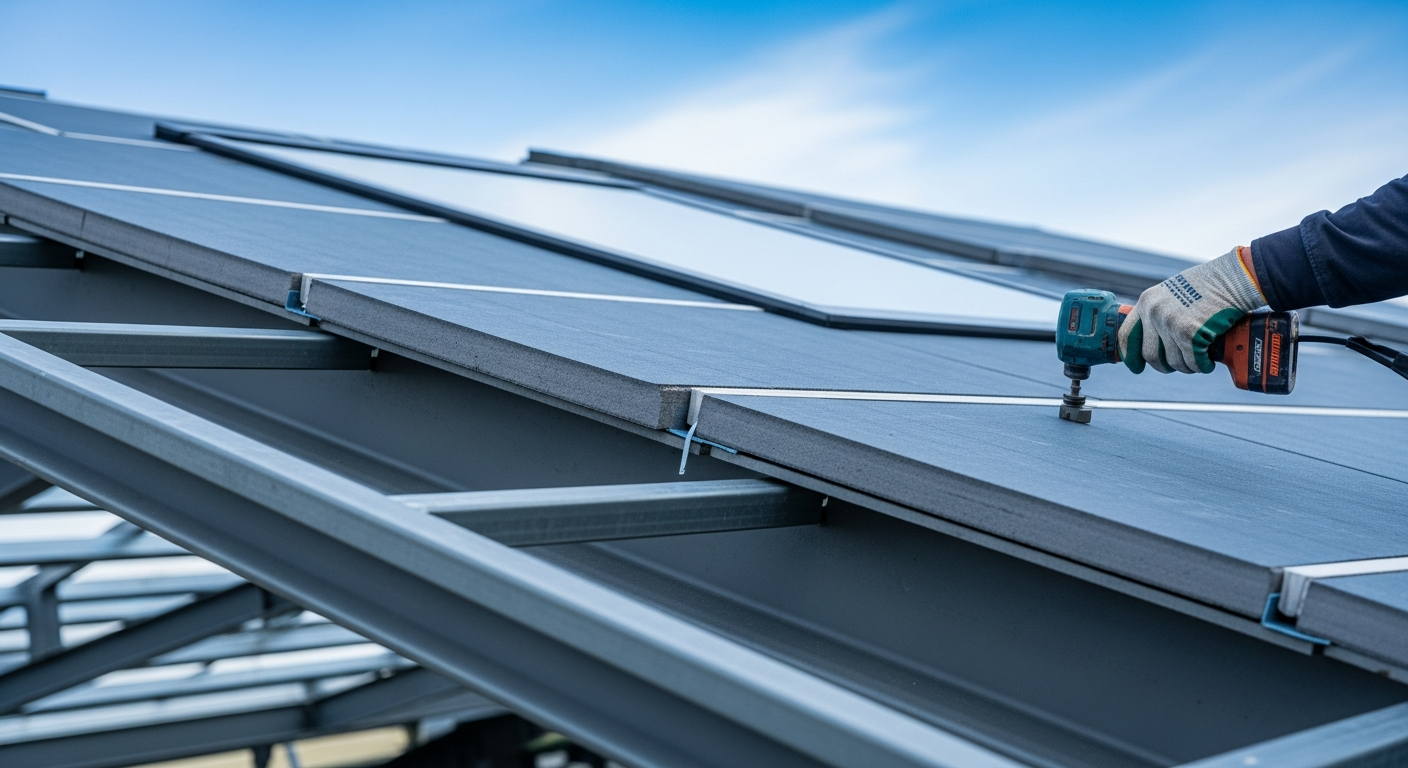
Very. A well insulated roof cuts heating and cooling costs for the life of the building and helps meet building regulations and energy targets. Specifying the right U value at design stage is far cheaper than upgrading later. Later in the roof's life, industrial roof coatings can restore weatherproofing and add years before any replacement is needed.
Who should install the roof?
Industrial roofing is specialist work at height, and a poor installation leaks and corrodes within years. It pays to use an experienced team. Our round up of the top UK industrial roofing contractors is a useful reference if you are comparing options.
Designing the roof into your build
Because we handle the whole industrial building construction and warehouse construction, we design the roof alongside the steel frame and cladding, which keeps the building weathertight on schedule. See how it fits the wider programme in our guide to the stages of a construction project.
Need the right roof on your new unit? Contact our team for advice.