
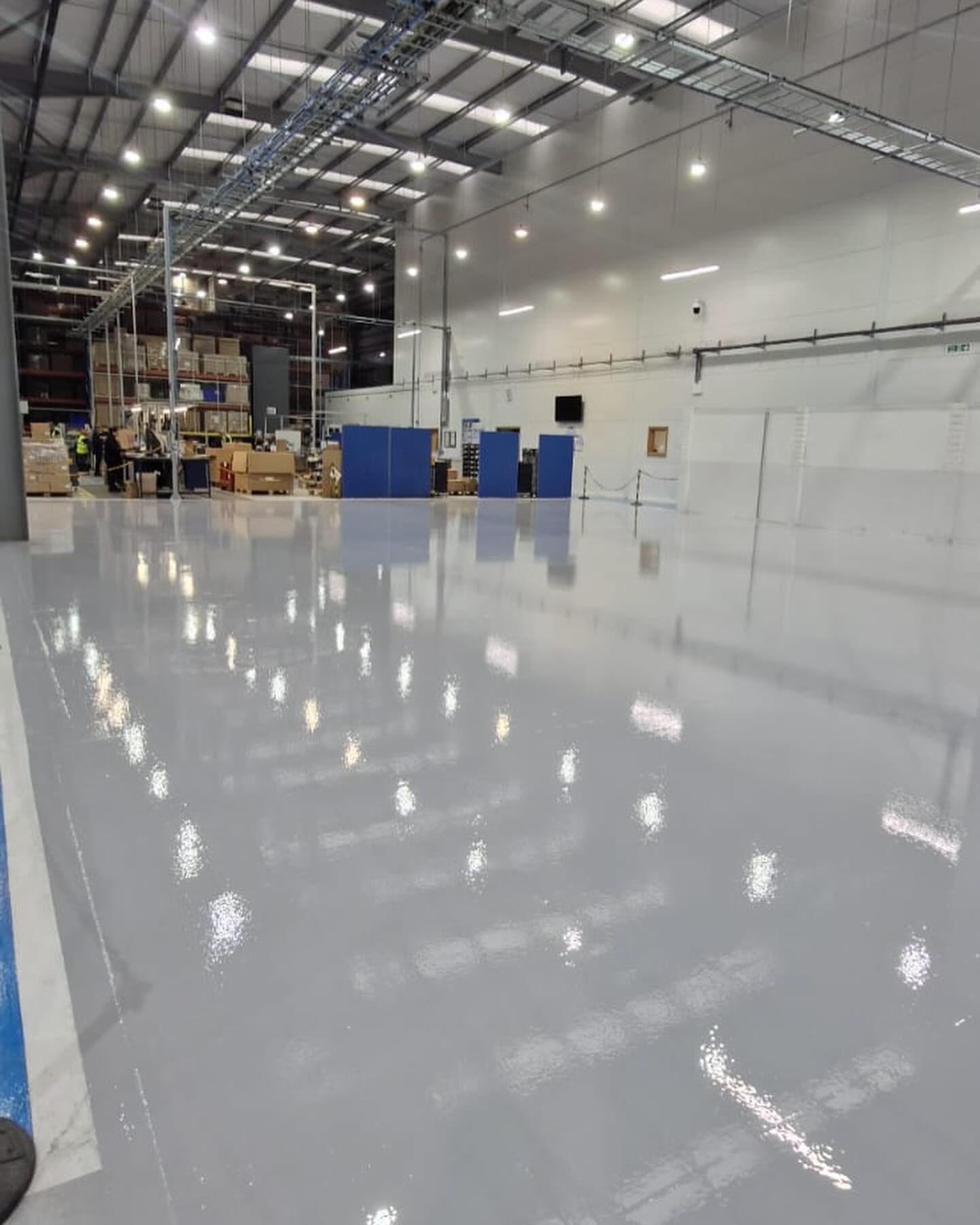
Epoxy resin flooring delivers durability, low maintenance, and bespoke design. Colours, patterns, and textures adapt to industrial plants, warehouses, food production facilities, laboratories, and domestic garages.
But safety matters. What health hazards exist during installation? What happens once curing finishes?
What are the chemical components in epoxy flooring systems?
Epoxy flooring comprises two reactive components: epoxy resin polymer and a hardening agent (curing agent). Mixing triggers exothermic polymerisation, cross-linking the molecules into a rigid plastic matrix. The specific resin type and hardener chemistry determine the floor's final properties, curing speed, chemical resistance, temperature tolerance, and VOC emissions.
What are the main types of epoxy resins used in industrial flooring?
Bisphenol A (BPA) epoxy dominates industrial and commercial applications. Superior mechanical strength and solvent resistance suit heavy machinery environments. Bisphenol F (BPF) epoxy performs above 80°C and resists sustained chemical attack better than BPA. Vinyl ester systems withstand aggressive solvents, caustics, and sustained heat, commonly specified for chemical plants and refineries, often alongside PU resin screeds where impact and thermal-shock resistance are also required.
Resin selection depends on exposure conditions, not aesthetics.
How do hardeners affect safety and performance in epoxy flooring?
Hardeners dictate curing kinetics, mechanical flexibility, and durability. Polyamine hardeners cure rapidly (2–8 hours) and deliver excellent chemical resistance in industrial settings. Polyamide hardeners introduce elasticity and impact absorption, protecting surfaces from dropped tools and vibrating machinery. Cycloaliphatic hardeners resist UV degradation, essential for open-air or skylit facilities where sunlight exposure accelerates yellowing and resin breakdown.
Is fully cured epoxy resin flooring safe for everyday use?
Yes. Cured epoxy floors release no volatile organic compounds (VOCs) and pose no inhalation hazard. The polymerised surface resists bacterial growth, chemical spills, and moisture ingress. Seamless construction eliminates joints where water, chemicals, or dust accumulate, a critical safety advantage in food production and pharmaceutical environments.
The safety risk exists only during installation and the first 24–72 hours of curing.
What volatile organic compounds do epoxy floors emit during installation?
Uncured epoxy and hardener blends release aliphatic and aromatic hydrocarbons, amines, and formaldehyde as solvents evaporate. Inhaling high concentrations (>1,000 ppm) triggers headaches, dizziness, respiratory irritation, and sensitisation. Modern low-VOC and zero-VOC formulations reduce emissions by 85–99%, but proper site management remains non-negotiable.
Installation teams must control airborne exposure through ventilation and respiratory protection.
What ventilation and safety precautions protect workers during epoxy floor installation?
Continuous mechanical ventilation, at least 8–12 air changes per hour, disperses VOC concentrations below occupational exposure limits (typically 50 ppm for 8-hour time-weighted average, per HSE guidance). Cross-flow ventilation with inlet fans drawing fresh air and exhaust fans removing contaminated air proves most effective. Recirculation systems fail; outside air must replace the workspace volume repeatedly.
Respiratory protection (Type IIB half-mask cartridge respirators rated for organic vapours) protects installers when ventilation capacity is limited. Nitrile gloves prevent skin sensitisation to uncured resin. Safety goggles protect against splashes. Footwear covers prevent tracking uncured resin beyond the work zone.
Installation teams must follow industrial flooring installation protocols that account for facility size, ambient temperature, and humidity, all factors affecting VOC evaporation rates.
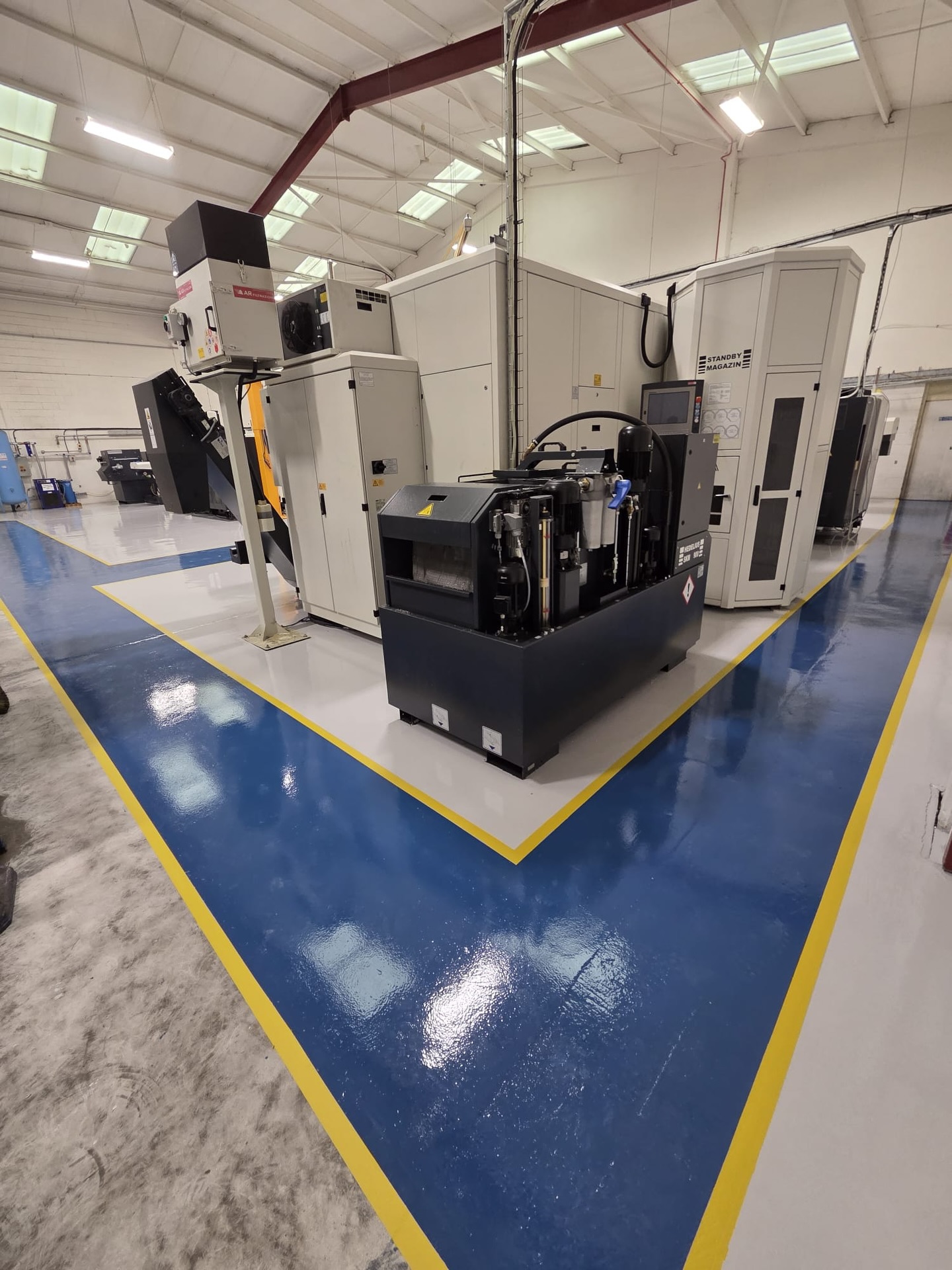
Why does professional installation reduce safety and durability risks?
Anglia Decor's installation teams eliminate common errors that compromise both safety and floor life. Incorrect resin-to-hardener ratios (even ±5%) disrupt polymerisation, leaving uncrosslinked material that remains tacky, attracts dust, and releases VOCs long after curing should finish. Surface preparation failures, residual moisture, oil, or dust, prevent adhesion and create microblisters that trap off-gassing.
Our team selects resin and hardener combinations matched to your environment's temperature, humidity, and chemical exposure profile. We apply epoxy flooring systems at temperatures above the dew point, preventing moisture entrapment. Post-cure schedules respect full polymerisation windows before foot or vehicle traffic resumes.
Professional-grade resin flooring systems deliver lower residual VOC content than retail epoxy paints. Our low-VOC and zero-VOC product ranges meet BS EN ISO 16000 emission standards.
How quickly is epoxy flooring safe after installation?
Epoxy reaches 95% hardness within 24 hours at 20°C but continues polymerising for 7 days. Light foot traffic becomes safe after 48 hours. Heavy machinery, forklift traffic, or chemical exposure requires the full 7-day cure window. Temperature and humidity slow or accelerate this timeline, cold, humid conditions extend it by 2–3 days.
Your Anglia Decor team provides a facility-specific cure schedule before installation begins.
Is epoxy resin flooring safe for food production and pharmaceutical environments?
Fully cured epoxy supports food contact surfaces under FDA regulations (CFR 21, Part 177) and pharmaceutical cleanroom standards. Zero porosity prevents bacterial harbouring. Chemical resistance withstands routine sanitisation with hypochlorite, quaternary ammonia, and acid-based cleaners used in food processing and lab environments. Food production flooring and laboratory flooring demand epoxy systems rated for continuous aggressive cleaning, a safety requirement Anglia Decor integrates into specification and installation.
What ongoing maintenance keeps epoxy floors safe long-term?
Weekly sweeping and monthly wet-cleaning with neutral pH detergent maintain chemical resistance and prevent slipping hazards from chemical or oil residues. Do not use acidic or abrasive cleaners, they etch the surface and degrade the topcoat. Inspect annually for cracks, spalling, or chemical staining; repair breaches immediately to prevent moisture ingress and sub-floor deterioration.
Properly maintained epoxy floors remain safe and chemically resistant for 15+ years in industrial settings.
Summary
Epoxy resin flooring presents no health hazard once cured. Installation safety depends entirely on VOC management, ventilation, respiratory protection, and proper procedure. Anglia Decor installs warehouse flooring for brand-new warehouses and specialised systems using low-VOC formulations, professional site control, and resin-hardener selections tailored to your facility's chemical and thermal exposure profile.
The result: a durable, seamless surface that meets industrial safety standards without compromising installation health or long-term durability.